When to Schedule Your Newborn Photos: A Practical Guide for Real Life
The most common newborn photo question sounds simple: “When should we schedule?” But underneath that question is usually a bigger one: “How do I make sure we don’t miss these early days if the baby comes early, recovery is harder than expected, or life doesn’t follow the calendar?” This guide gives you a realistic plan for booking during pregnancy, choosing a session window after birth, and adjusting if the timing shifts.
Last Update: May 29, 2026 • Newborn
Most parents do not ask about the timing of newborn photos because they love calendars. They ask because the newborn stage feels like something you only get one chance to photograph.
Maybe you’re still pregnant and trying to plan ahead before things get busy. Maybe your baby is already here, and you’re counting days, wondering if you’re too late. Or maybe birth, recovery, jaundice, a NICU stay, a C-section, or a baby who simply arrived on their own schedule has already changed the timeline you pictured.
That’s why “When should we schedule newborn photos?” usually means two things:
- When should I book the session?
- What is the best age for newborn photos?
The common answer is a date range. The more useful answer is a plan with room for real life.
There is a classic newborn window, but there is no single perfect day. This guide will help you understand how your baby’s age can shape the session, what still works if you’re booking late, and which session style may fit your baby, your recovery, and the kind of images you want.
On this page:
- Quick facts
- When to book
- How scheduling works
- If you’re booking late
- Best timing for newborn photos
- What changes in the first few months
- Ideal session types by age
- When timing shifts
- FAQs
- Closing thoughts
Quick Facts
Here is the short version before we get into the nuance:
- Best general window for newborn photos: 5–21 days after birth
- Sweet spot for many families: 10–14 days
- The session plan should adjust to your baby, not the other way around.
- Best time to book during pregnancy: 26–28 weeks
- If the baby is older, the Baby in Your Arms Session can be a good studio option through about 2 months, and the In-Home Lifestyle Session can work beautifully up to 3 months.
- A reminder to keep it simple: Any professional photos in the first 3 months are better than no photos.
When to Book Your Newborn Session
The Best Time to Book: 26–28 Weeks of Pregnancy
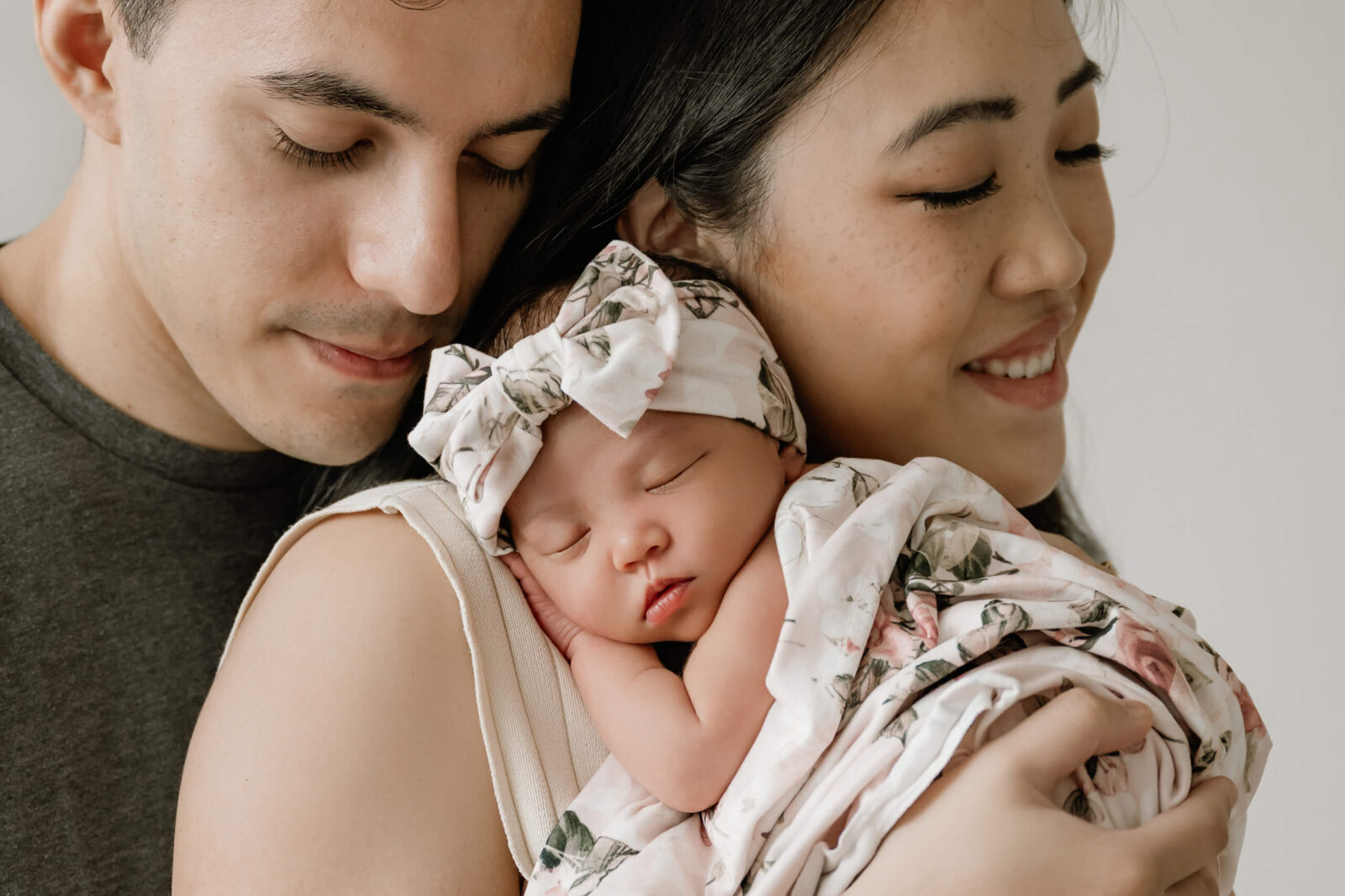
If you’re able to plan ahead, I recommend reserving your newborn session when you’re around 26–28 weeks pregnant.
For many parents, this is a practical window. You often have enough energy to research photographers, compare styles, and choose someone whose work and process feel like a good fit, without feeling rushed or pressured.
And that matters, because newborn photos aren’t just about the images. The experience matters too. The right photographer should feel like a steady presence during a season that can feel anything but steady.
If You’re Also Considering Maternity Photos
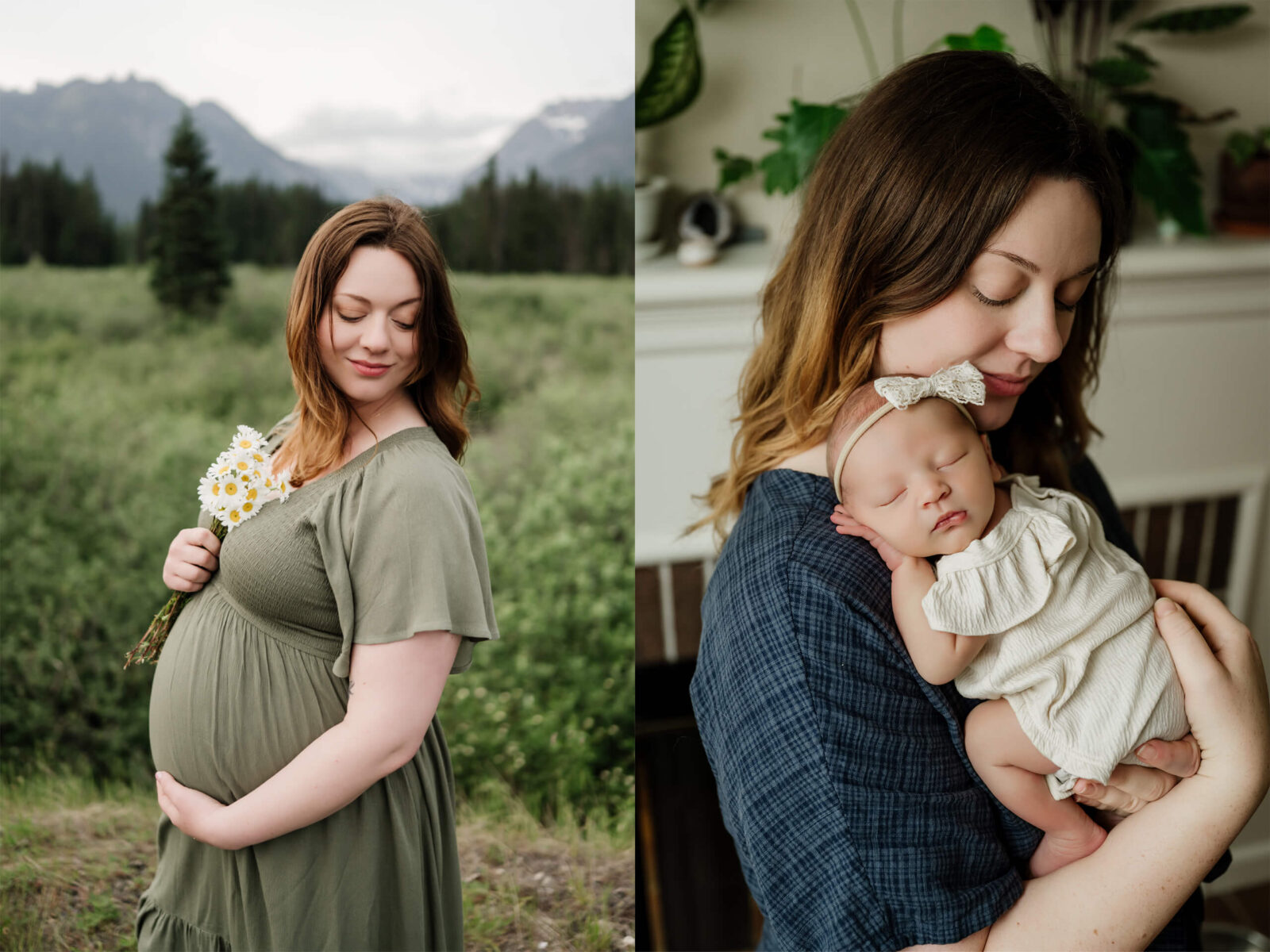
If a maternity session is on your to-do list and you haven’t booked it yet, this could be a good time to plan it as well.
For maternity photos, I typically recommend scheduling the session when you’re around 28–32 weeks pregnant. Around this time, many women still have more energy and are usually able to move around more comfortably.
Some photographers offer maternity and newborn packages for convenience and some savings. You don’t need a package to plan both, but it can be helpful to know it’s an option while you’re making decisions.
Why Booking Early Helps
Most newborn photographers take a limited number of newborn sessions each month to stay flexible around due dates and the unpredictable nature of birth. That flexibility is part of the service, and it’s also why spots can fill faster than families expect.
Sessions also tend to fill quickly during busy seasons, especially the end of summer, fall, and early winter, when family sessions and other bookings overlap. Waiting until the last weeks of pregnancy can mean the photographer you want isn’t available.
There’s also a practical benefit to booking early: it gives you time to prepare. Outfits, small decisions, and the mental load of “one more thing to figure out” are much easier to handle before you’re in the newborn fog.
How Scheduling Works
I book newborn sessions using your due date. Once your baby arrives, contact me as soon as you reasonably can, and we’ll choose the actual session date together based on your baby’s arrival, your recovery, and the session type you booked.
This keeps your spot reserved without asking you to predict the exact day your baby will be ready for photos.
If You’re Booking Close to Your Due Date (Or After Baby Is Already Here)
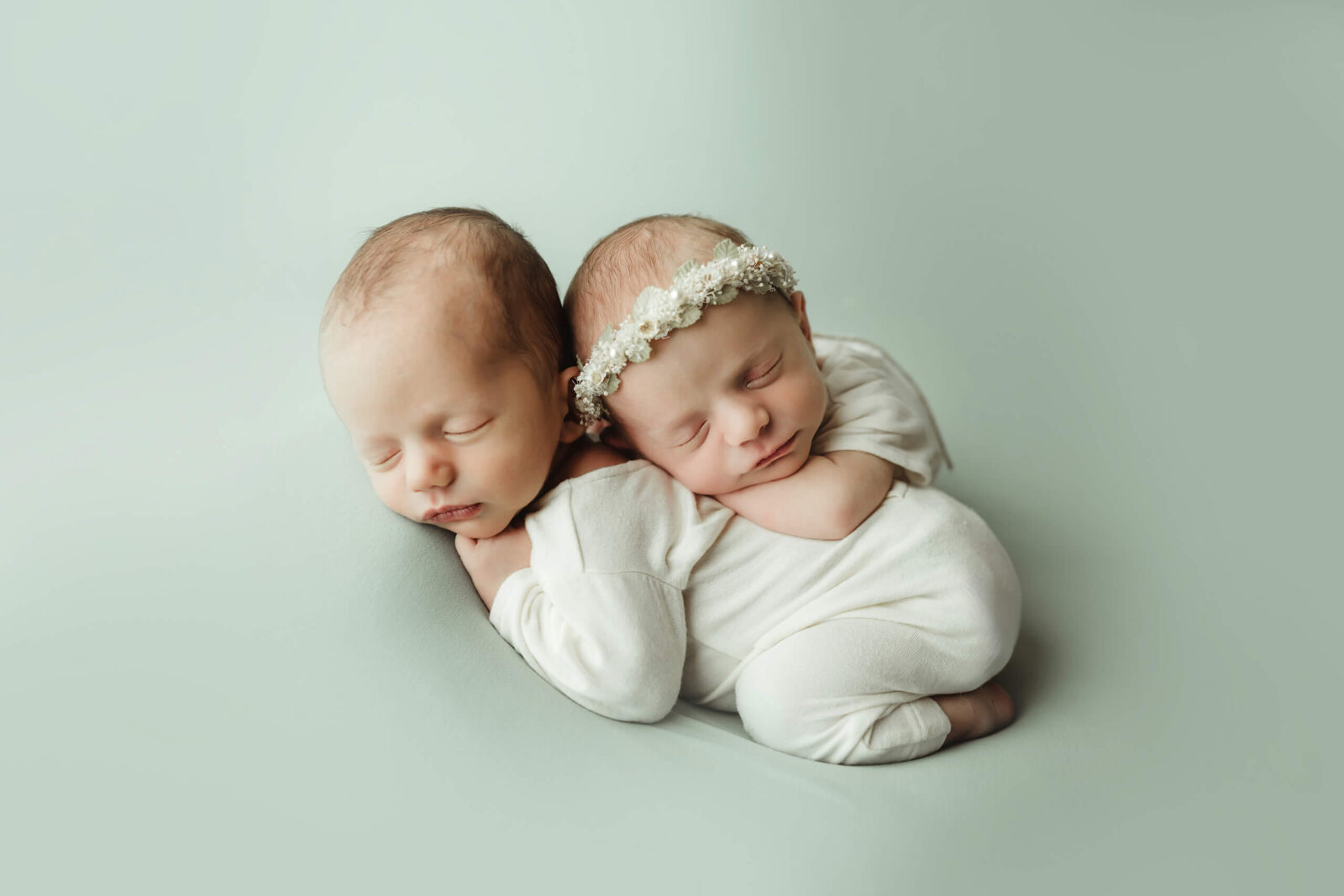
If you’re booking later in pregnancy, start by checking my online schedule. It’s up to date.
Go to my Newborn Sessions page, choose the session type you’re considering, and click Book Now under that session to open the scheduler.
And if your baby is already here and you’re hoping to work with me, reach out anyway. Even if the timing isn’t what you originally pictured, it doesn’t mean you missed your chance. I may be able to fit you in, and if your baby is a bit older, I’ll guide you toward a session style that suits that stage.
The Best Timeframe for Newborn Photos
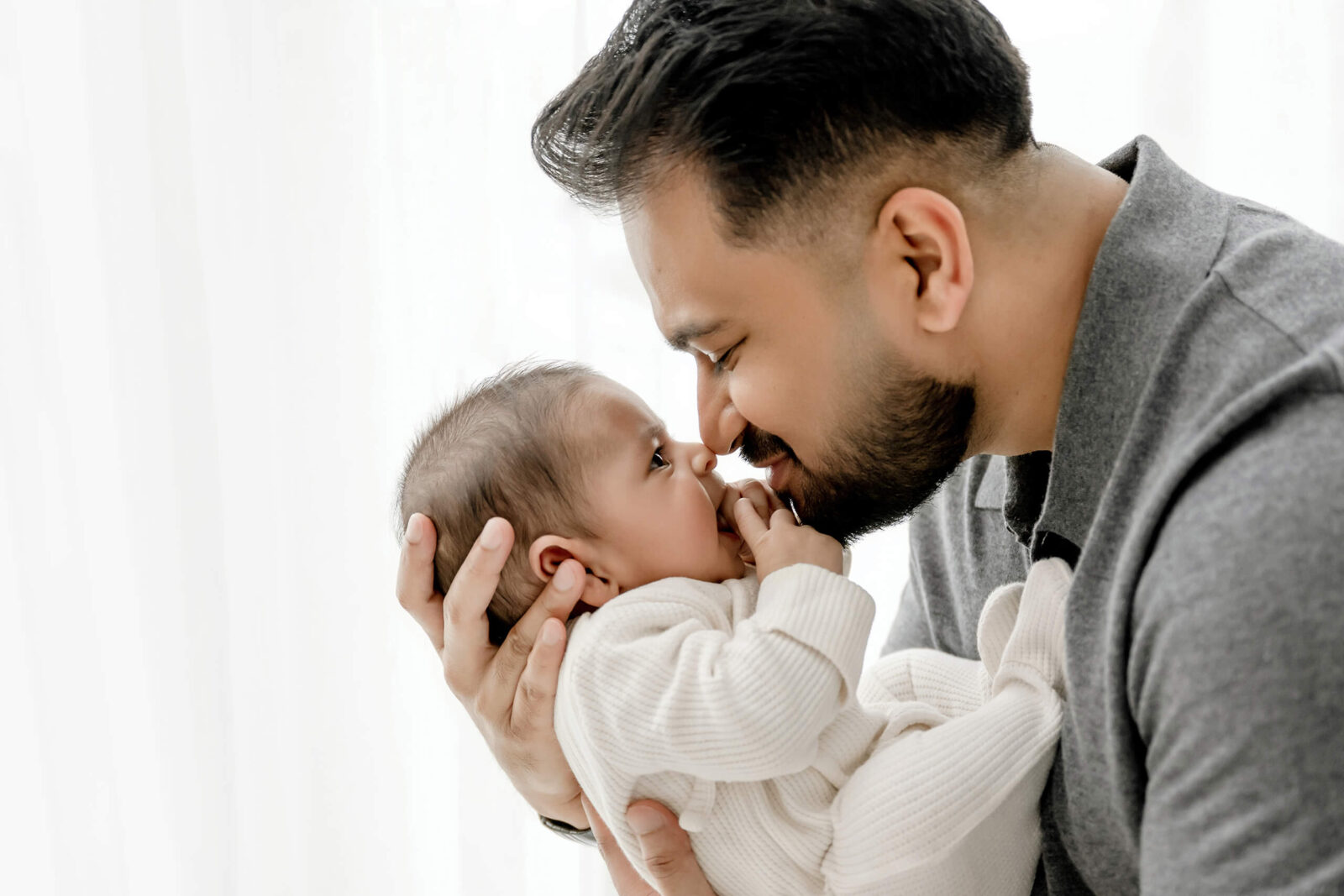
This is where timing can start to feel stressful for parents. The internet often makes the newborn window seem very narrow, but babies and postpartum recovery do not always fit that schedule. The goal is not to chase one perfect day. It is to understand what each window gives you, and what still works if the plan changes.
The Recommendation, with Real-World Flexibility
Once your baby has arrived, I recommend scheduling newborn photos between 5 and 21 days after birth. During this window, most babies are still very sleepy and tend to settle more easily into gentle posing. This gives us more room for wrapped images, gentle posing, and those curled-up newborn details many families picture when they think of newborn photos.
That said, timing can be adjusted based on what feels best for your family. And that flexibility is not a “backup plan.” It’s part of doing this thoughtfully.
Around 5 days can be ideal if you feel ready and you’d like to capture your baby as close to birth as possible.
Around 21 days can work very well if your family needs a little more breathing room after birth. Sometimes that’s about recovery. Sometimes it’s about the baby needing extra time due to jaundice, a NICU stay, or other early medical factors.
A Truthful Note About Timelines
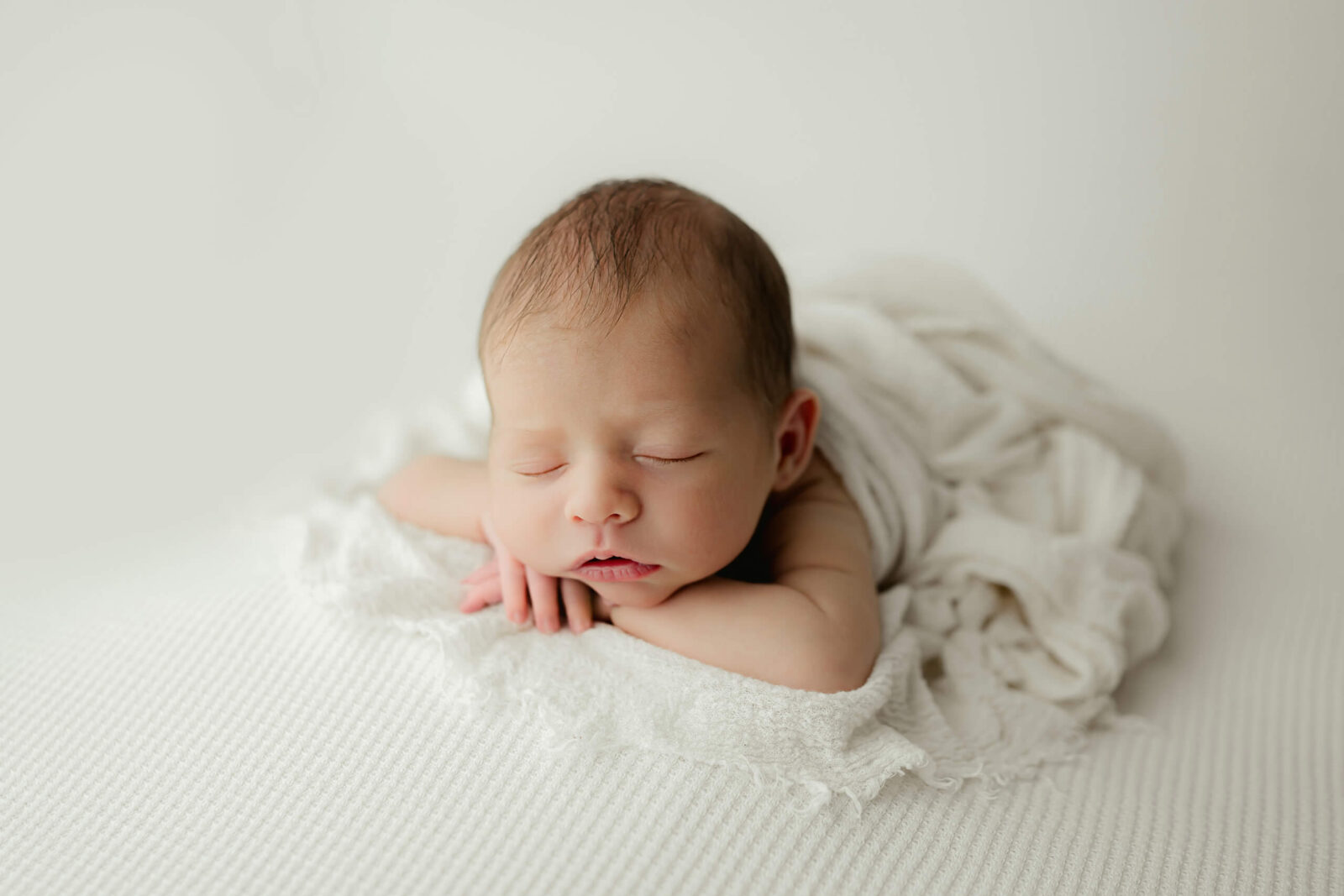
This is where the simple answer can accidentally create pressure. It’s tempting to treat the “best” week like a rule, but newborn sessions do not work that neatly in real life.
I’ve photographed 4-week-old babies who slept through the entire session, allowing me to pose them for more challenging shots that parents wanted. And I’ve photographed babies 5–10 days old who were less sleepy and very sensitive to posing.
That’s why I don’t recommend getting attached to a specific window. Unexpected things happen, and each window gives us a slightly different kind of gallery.
What matters most is working with an experienced photographer who can come in with a plan and adjust it based on how your baby is responding, without making you feel like something is “going wrong.”
What Tends to Change as the Baby Gets Older
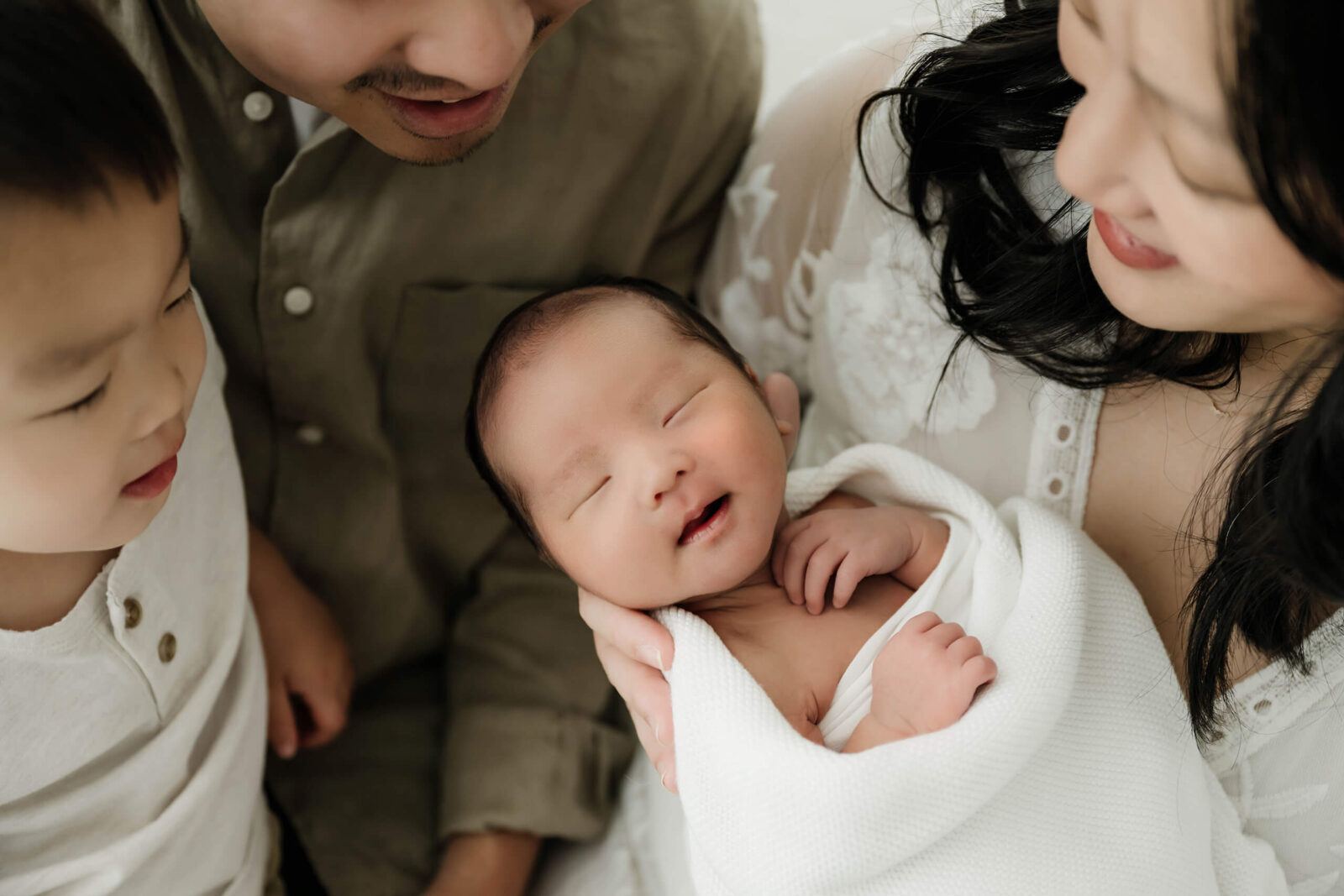
This is the part that makes timing less mysterious. Babies do change as the weeks go by, but the change is not a cliff. It is more of a shift in what kind of session plan tends to work best.
One thing I’ll say upfront, both as a mom of three boys and a newborn photographer: in my experience, babies don’t change all that much in the first 21 days. That’s why the 5–21 day window is such a reliable recommendation overall.
5–21 days
Generally speaking, 5–21 days is when babies look most like they did at birth. Within this window, the main difference is that babies often tend to sleep better, which can make it easier to settle into gentle posing and create a calm, classic newborn feel.
I want to be clear – better sleep is common at this stage, but it’s not guaranteed. Some babies are naturally more sensitive or more alert, even early on. That’s why I always come in with a plan and then adjust based on how your baby responds.
After 21 days
After 21 days, babies are generally more alert. You may see more hand movement, and their eyes tend to track better. The session can still be beautiful, but the plan often becomes more responsive, with more breaks as needed and a little more emphasis on natural moments.
Another shift that may occur after this point is the appearance of baby acne. Mild acne is usually something I can soften in editing. If it’s more severe, it can still be improved, but more intensive acne editing can make the skin look less natural. It’s not a reason to panic or cancel; it's just something I like parents to be aware of so it doesn’t catch you off guard.
After a month
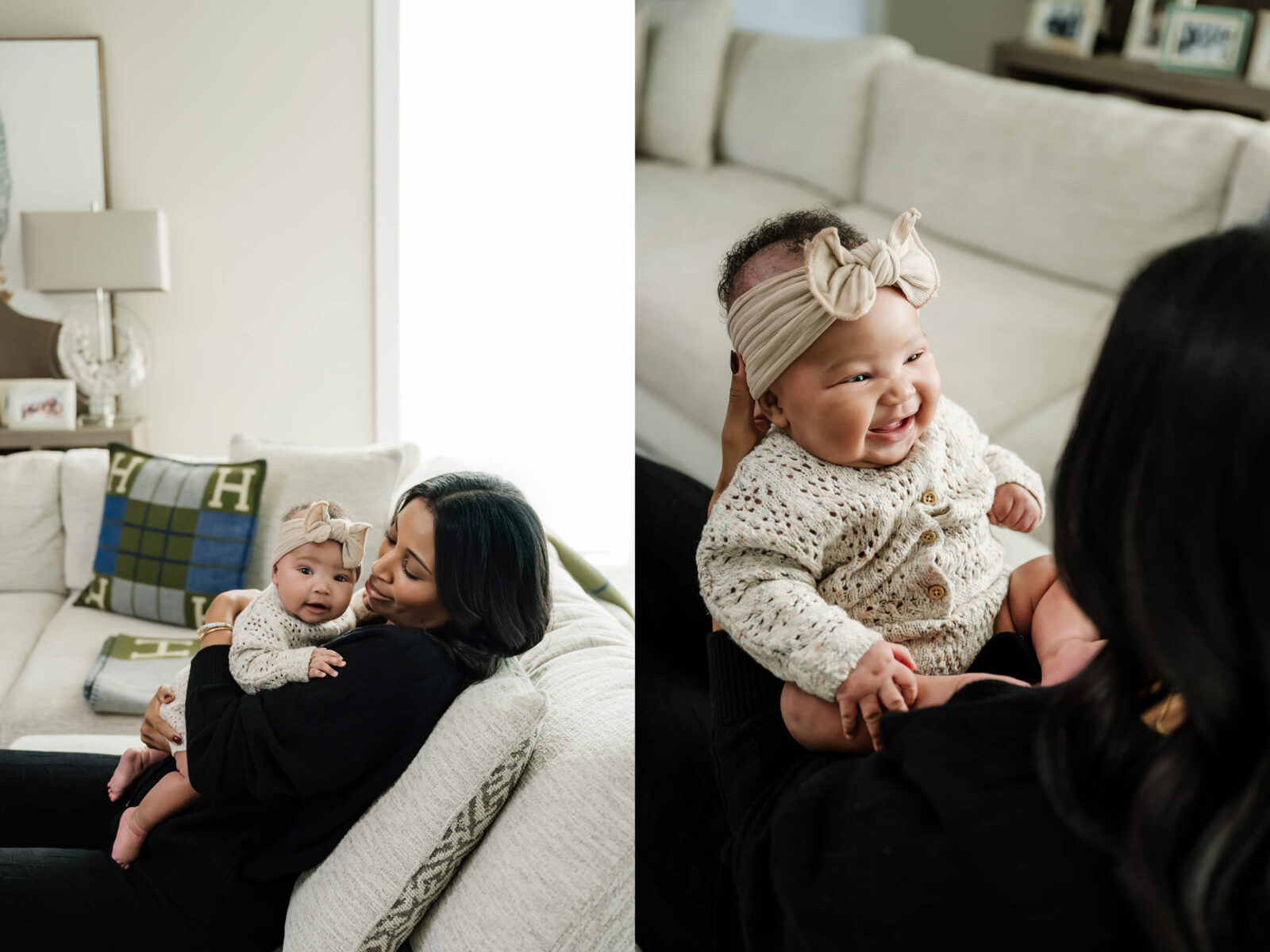
After a month, babies typically gain a few pounds and may no longer fit into the newborn props and outfits I have. At that point, we often focus more on photos of parents holding their children and use minimal props for solo images.
And if you’re reading this and realizing your baby may be in this range, I want you to hear this clearly: older newborn images can be incredibly meaningful. They often show more eye contact, greater awareness, and a stronger sense of connection with parents. It’s not a lesser version of newborn photos. It’s simply a different chapter.
Which Session Type Fits Best at Each Age
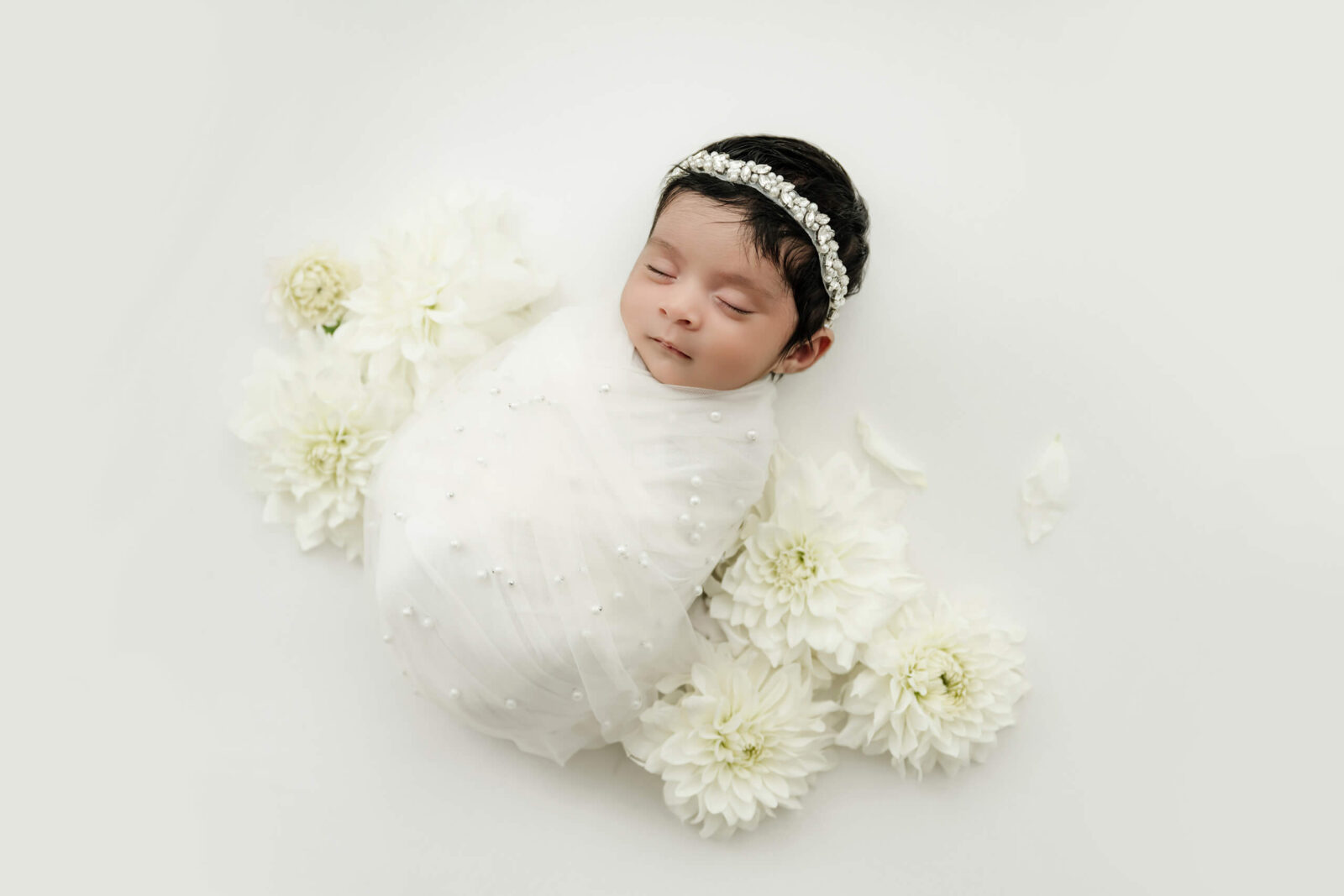
Next, I’ll walk you through how I usually guide families based on the baby’s age. This is not about forcing your baby into a rigid timeline. It is about choosing the session style that fits your baby now.
| Baby’s age | Session types I usually recommend | Why |
|---|---|---|
| 5–21 days | Any newborn session type | This is the most flexible window. You can usually choose based on the look you want: posed studio newborn images, wrapped studio images, parent-and-baby connection, or an in-home lifestyle feel. |
| 21–28 days | Baby in Your Arms, In-Home Lifestyle, or Studio Deluxe | Babies are often more alert in this range, so the session may need more flexibility. Baby in Your Arms and In-Home Lifestyle do not depend on deep newborn sleep. Studio Deluxe can still work if you want more variety and enough time for feeding, soothing, and breaks. |
| 1–2 months | Baby in Your Arms or In-Home Lifestyle | These sessions work well when the baby is more alert because the focus shifts toward holding, connection, eye contact, and natural interaction. |
| 2–3 months | In-Home Lifestyle | At this age, I usually recommend an in-home approach because it works better for older babies and keeps the focus on family connection, your baby’s expressions, and the stage you are in now. |
A Studio Mini Wrapped Session is best for the early newborn window and is not recommended after 21 days.
When Timing Shifts
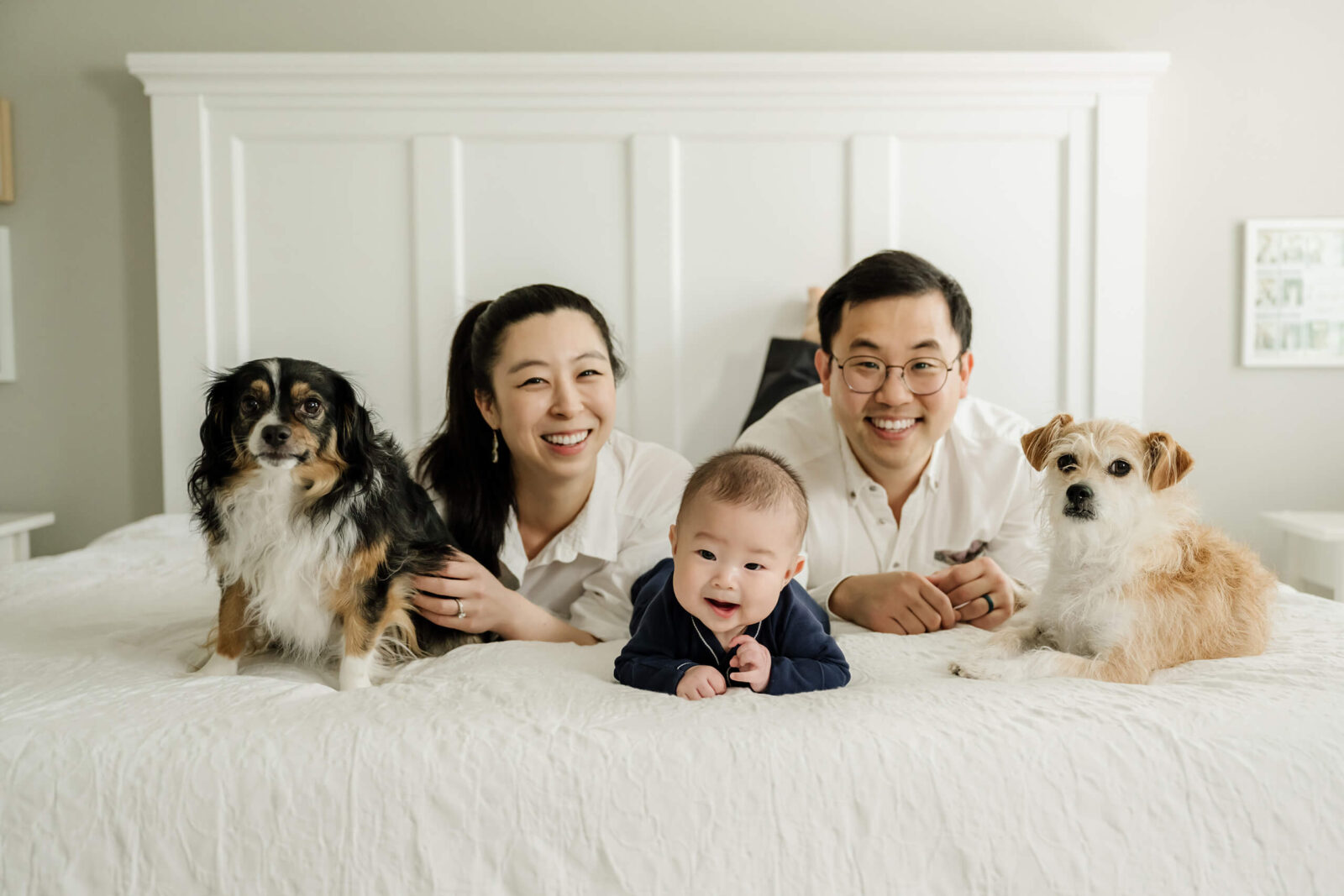
If you’re reading this and realizing your newborn session may not land in the “classic” window, I want you to take a breath.
The 5–21 day recommendation is exactly that—a recommendation, not a rule. Birth and recovery can be unpredictable, and sometimes the best timing is simply the timing that supports your baby and your family.
If your baby needs extra time early on, such as jaundice, a NICU stay, or being premature, or if you’re recovering from a C-section or any complications, it’s completely reasonable to schedule later.
Newborn photos should not become one more thing you have to push through. Take care of the baby and yourself first, then come in when it feels doable.
And if you’re feeling disappointed that the first days didn’t go the way you pictured, that feeling is valid. The good news is that you can still create meaningful images—sometimes especially meaningful—when you’re not forcing the experience to happen before you’re ready.
Frequently Asked Questions
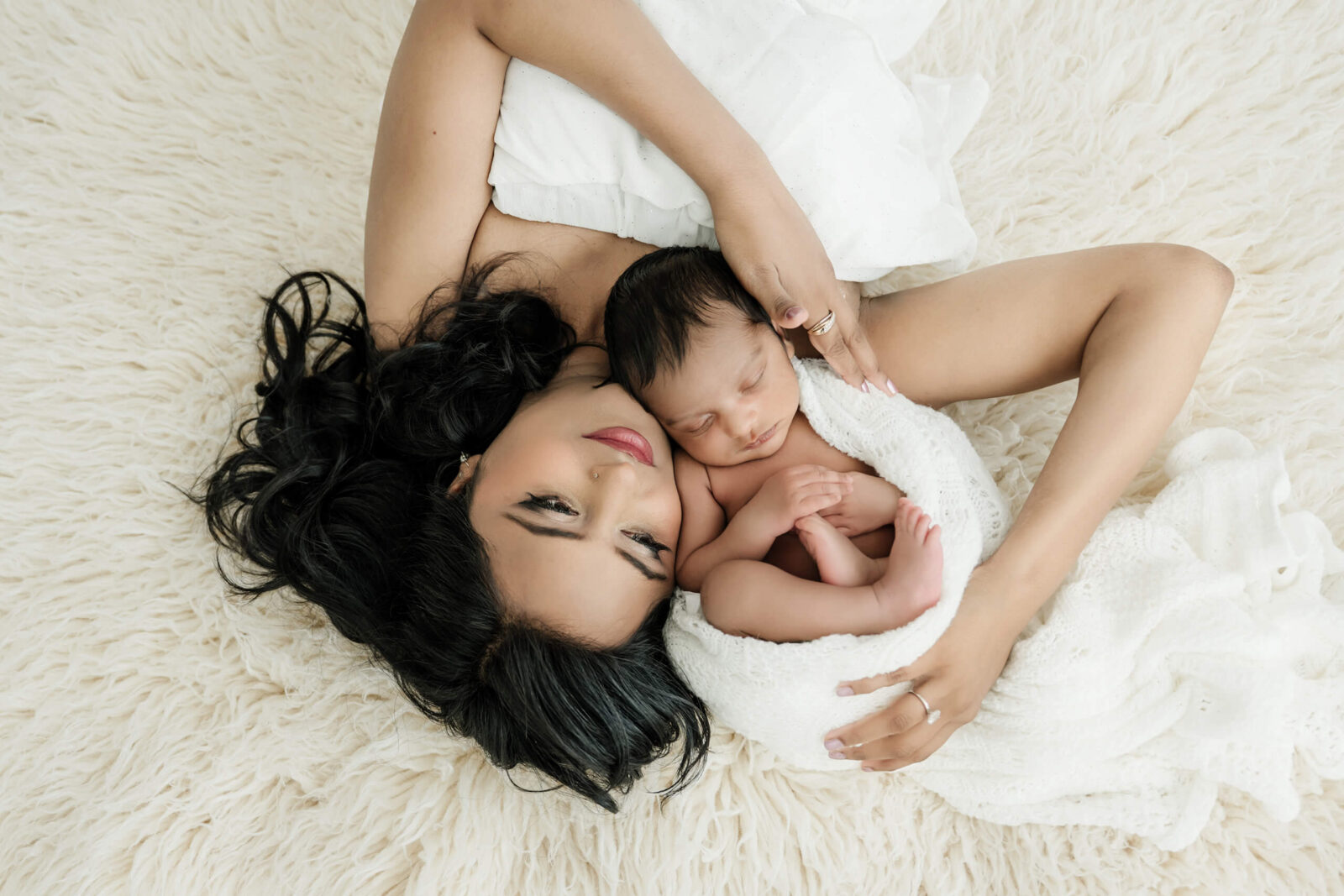
In general, I recommend 5–21 days after birth.
That’s completely okay. Sometimes babies need extra time early on (jaundice, a NICU stay, premature birth), and sometimes parents need more recovery time after a C-section or other complications. In those situations, it often makes the most sense to photograph your baby a bit later, when everyone is feeling more stable and supported. You can still create beautiful, meaningful images, and I’ll guide you to the session type that best fits your baby’s age.
Not necessarily. I’ve photographed four-week-old babies who slept through an entire session. That said, after about 21 days, babies are often more alert, and after about 4 weeks, many won’t fit into typical newborn outfits and props. In that case, we focus more on parent arms and minimal, simple setups.
Yes. For 28 days to 3 months, I typically recommend In-Home Lifestyle or Baby in Your Arms sessions. Learn more about these newborn sessions here.
26–28 weeks of pregnancy is ideal. This is also a good time to schedule your maternity session if you haven’t done so already.
I schedule newborn sessions using your due date. Once the baby arrives, you contact me as soon as you reasonably can, and we finalize the date together.
Start by checking my up-to-date scheduler to see what’s available. If the baby is already here, reach out anyway—sometimes I can fit you in, but the baby may be older.
Try not to treat a single day or week as your only chance. Every timeframe can be beautiful, and what matters most is working with a photographer who can adjust to your baby and your family’s reality.
Closing Thoughts
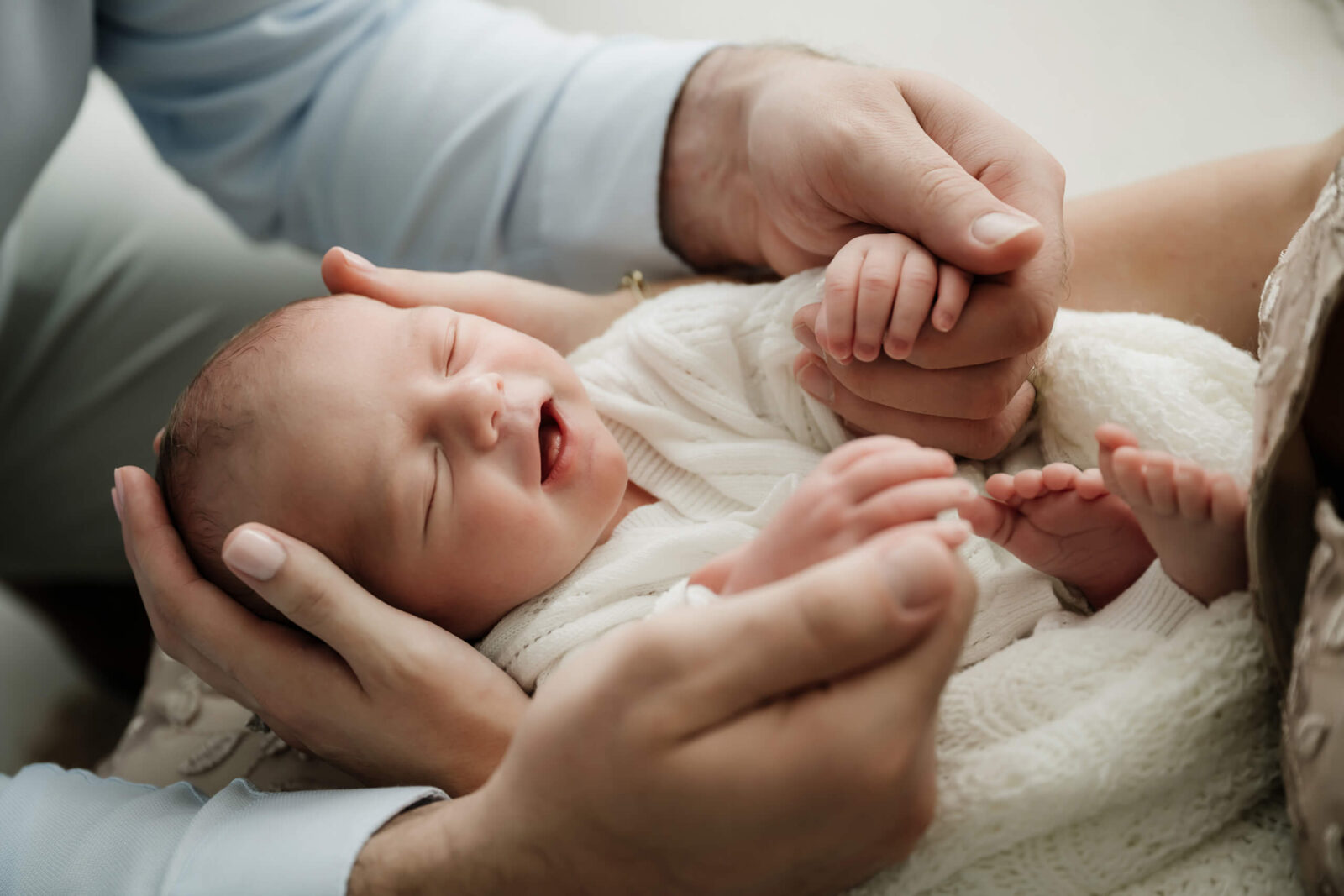
If you came here hoping for one perfect date, I hope this guide gave you something more useful: a way to understand the window, the exceptions, and the options.
The classic newborn window is helpful. It gives us sleepy, curled-up baby details and the most flexibility with posing. But it is not the only path to images that matter.
If your timing shifts, the story does not disappear. It simply changes shape: more eye contact, more parent arms, more awareness, and more of the baby you are getting to know.
Any professional photos in the first 3 months are better than no photos. I promise your future self will be glad you did.
If you’d like to compare the newborn session options and see which one fits your baby’s age, you can view my Seattle-area newborn sessions here.
About Lana
Svetlana (Lana) Ozik has photographed more than 2,300 Seattle-area families since 2008, specializing in maternity, newborn, milestone, and family photography. Her approach combines thoughtful preparation, clear direction, and the flexibility to adjust to babies, children, changing light, and the natural unpredictability of photographing families. Learn more about Lana and Lana Sky Photography.