Studio Maternity Photos: What to Expect, What to Wear & How I Guide Posing
A practical guide for expecting parents considering a studio maternity session, with guidance on posing, wardrobe, session pace, and the different looks we can create in my two current studio spaces.
Last Update: October 8, 2026 • Maternity
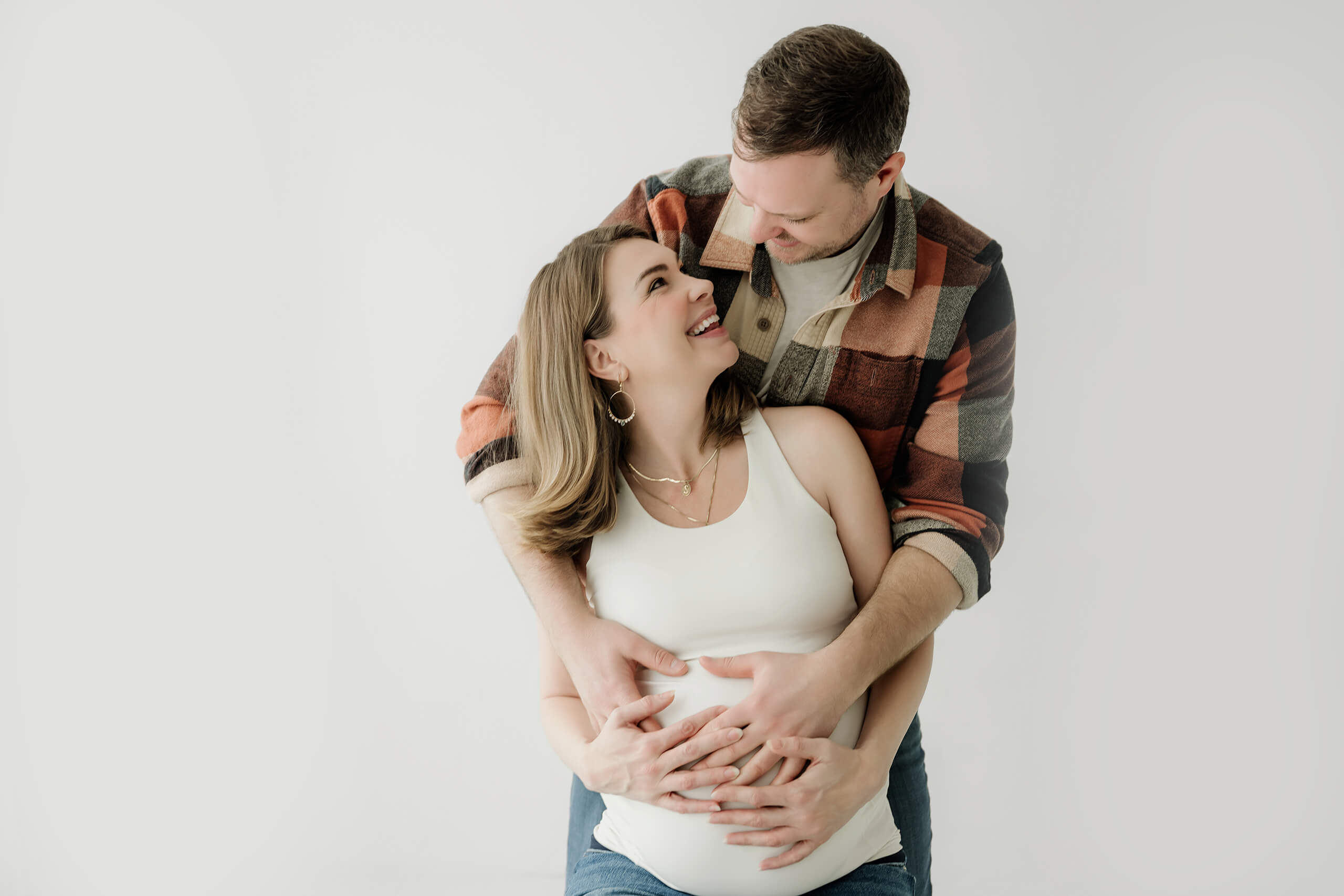
A studio maternity session can give you much more than one formal portrait in front of a backdrop.
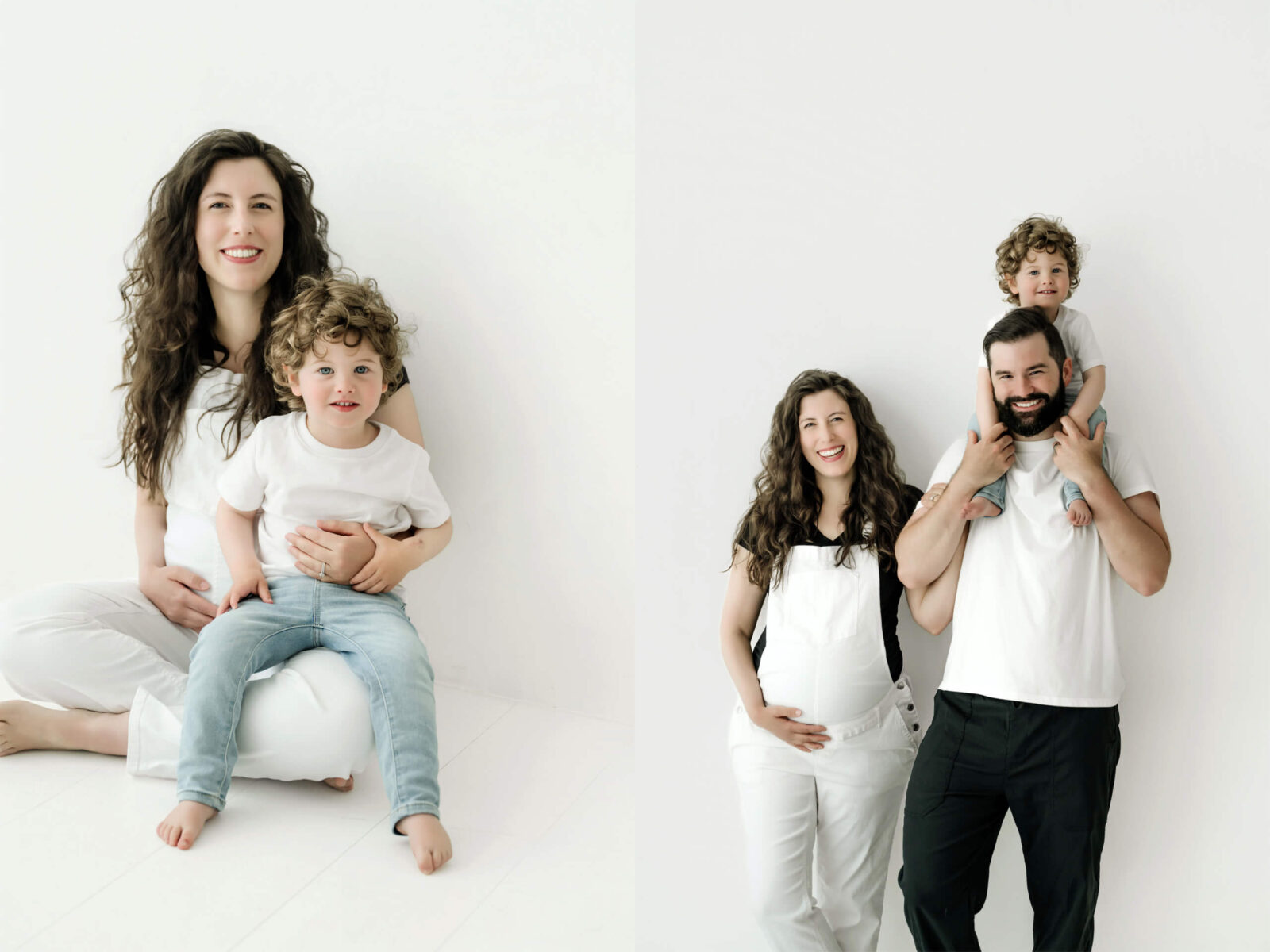
We can focus on you alone, photograph you with your partner, include your children, or create portraits of your family together. We can move between full-body photographs and closer belly-focused images, include a small meaningful keepsake, or show more of your belly if that is something you want.
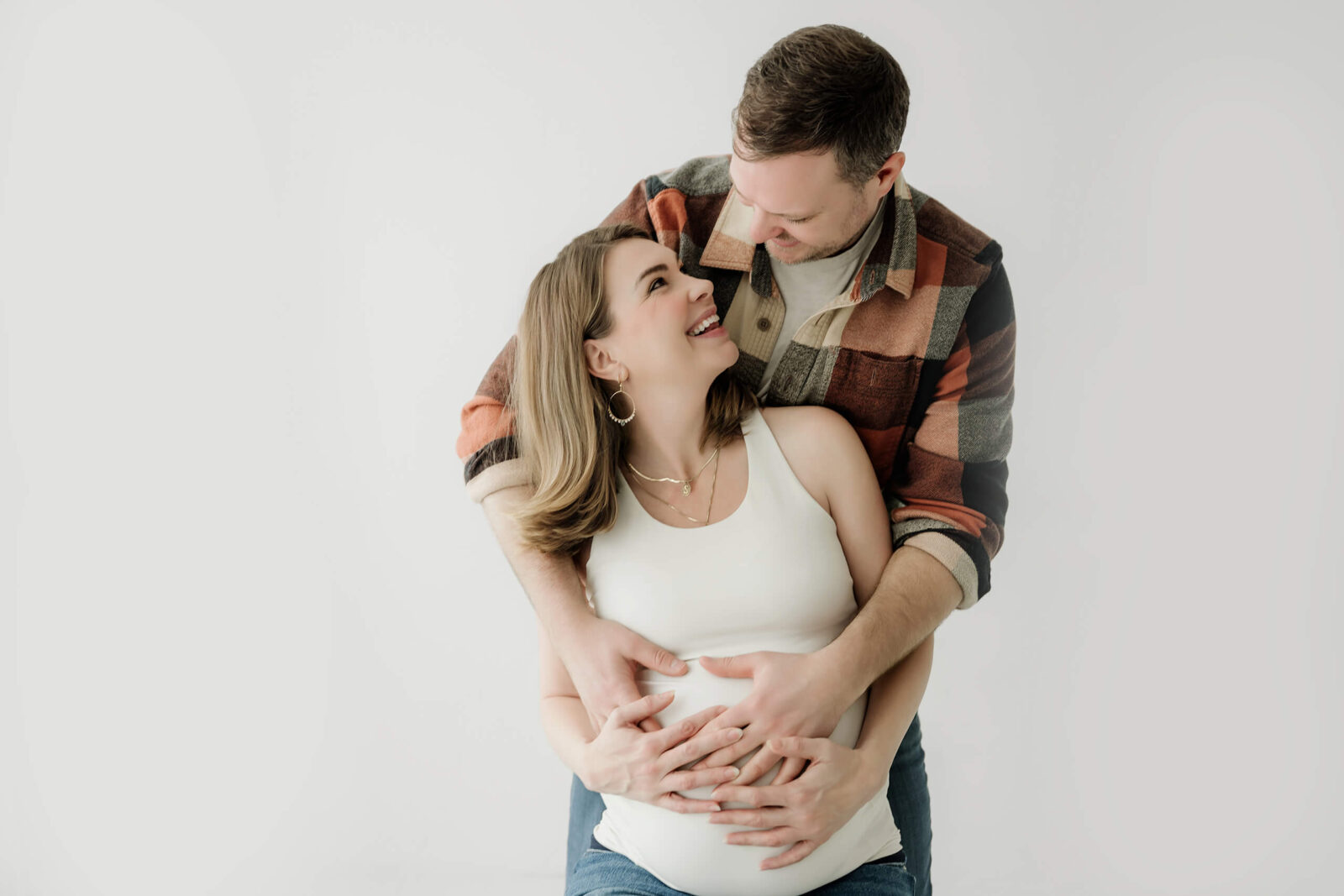
Some photographs will be intentionally posed and composed. Others may come from the smaller moments in between — the way you and your partner look at each other, a child leaning into you, or a natural reaction while I am moving you from one photograph to the next.
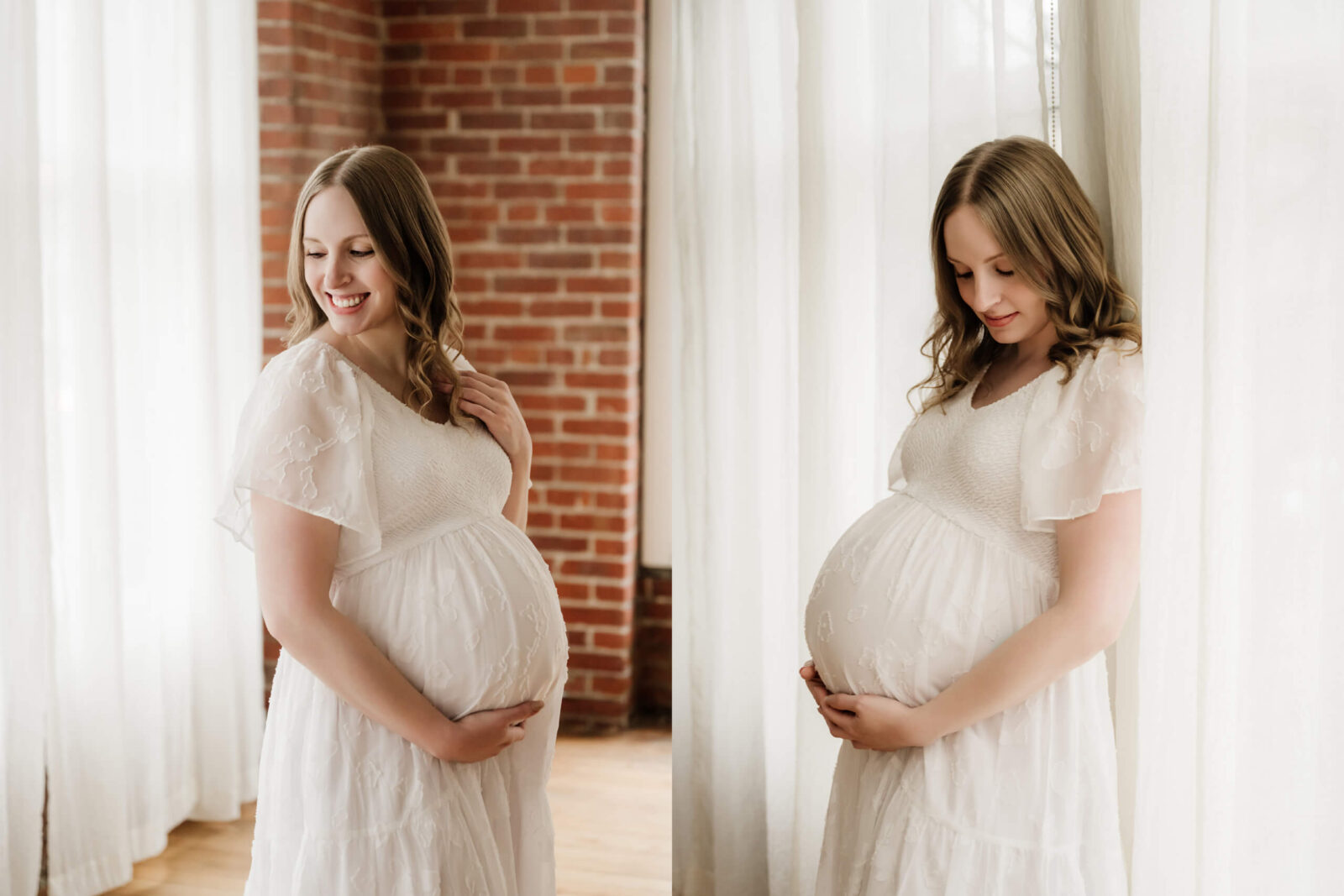
I currently photograph studio maternity sessions in two very different environments. Simply White in Kirkland is light, minimal, and intentionally restrained. Rustic Lifestyle in downtown Seattle has more texture, warmth, and environmental variety.
My approach to photographing you is not fundamentally different between the two. What changes most is the space around you and the visual character it brings to the photographs.
In this guide, I’ll show you how I approach posing, how I create variety within a studio gallery, how clothing affects the finished photographs, and what to consider when choosing between the two studio looks.
If you are still deciding between an indoor or outdoor setting, my guide to Outdoor vs. Studio Maternity Photos in Seattle can help you compare the two before choosing.
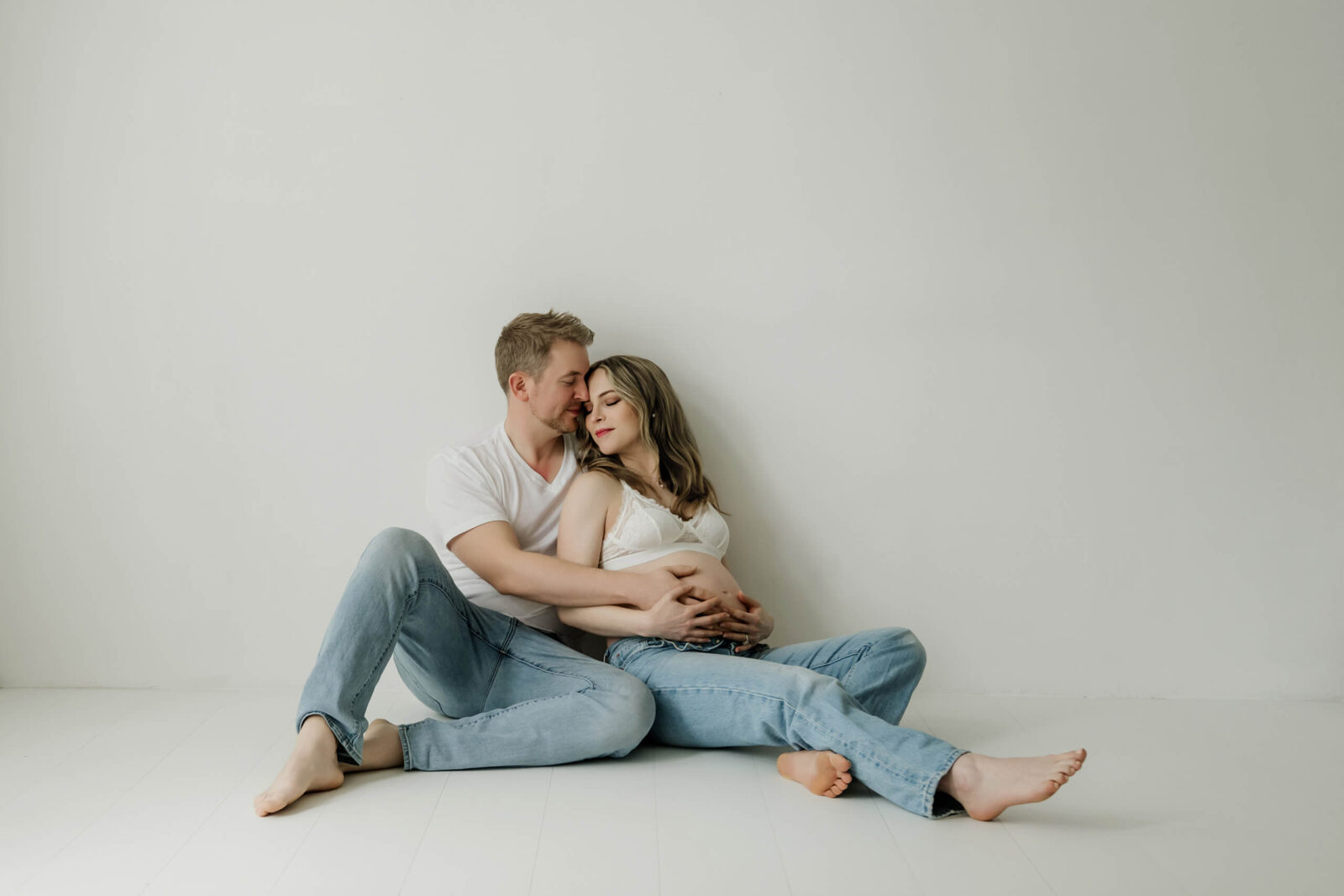
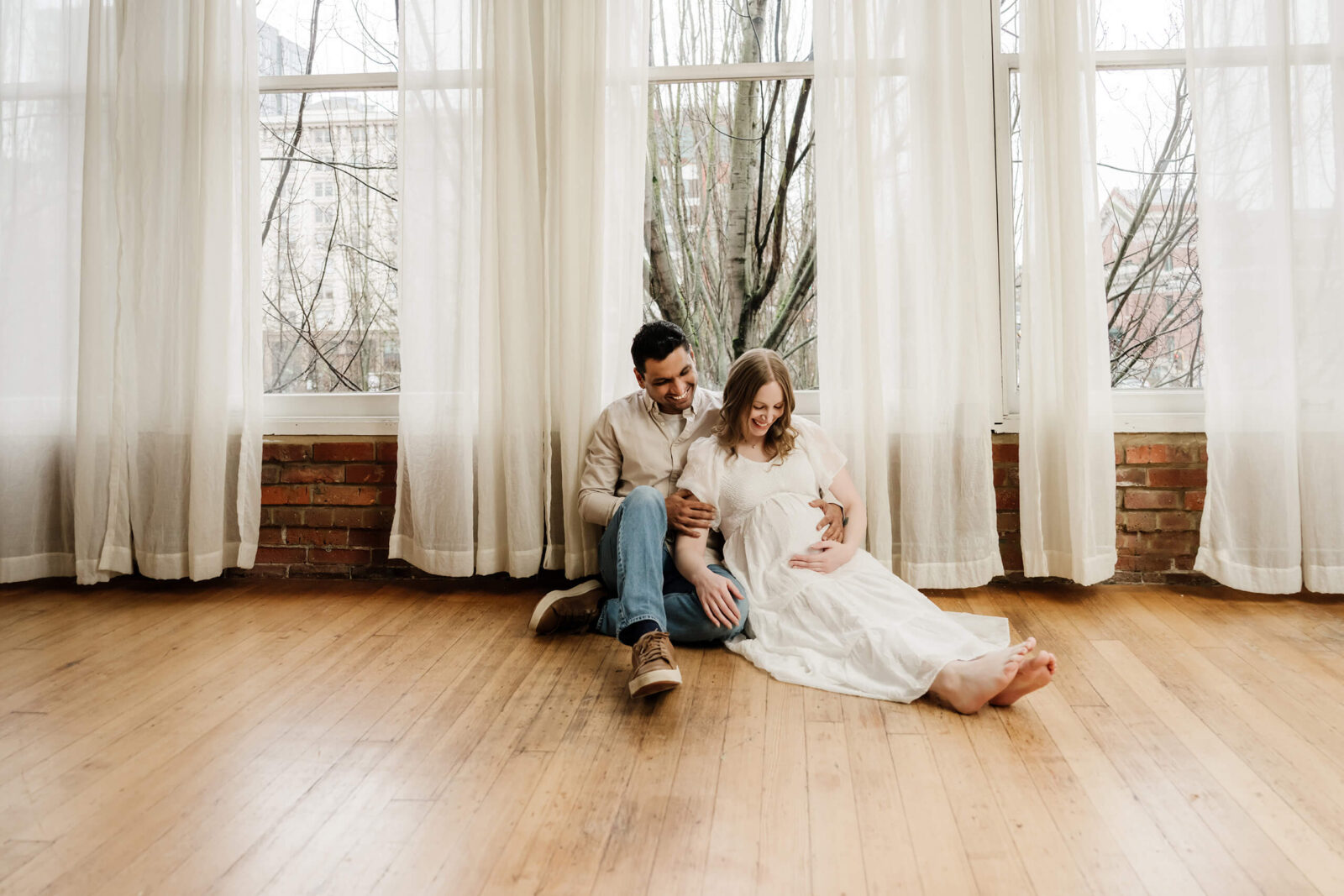
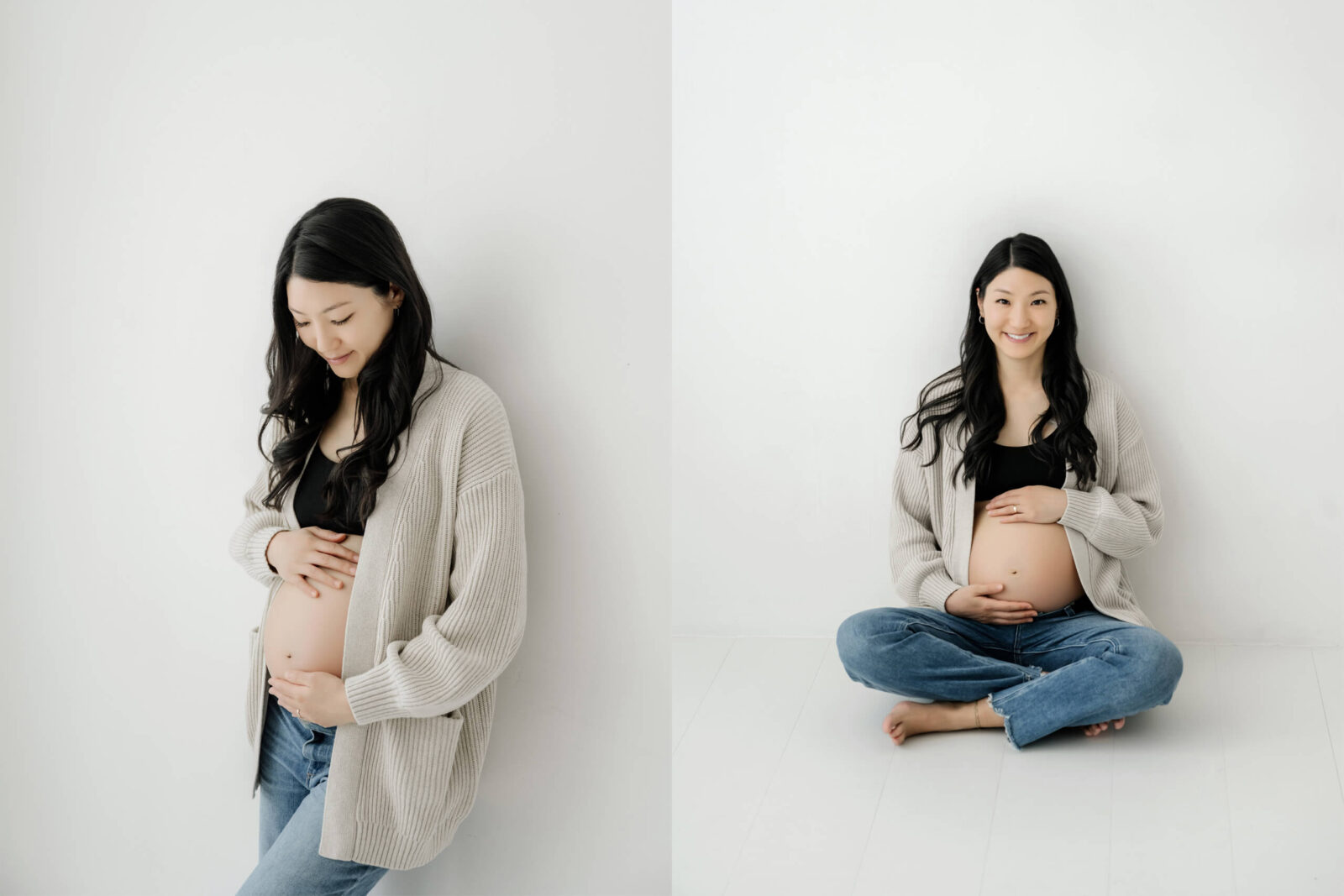
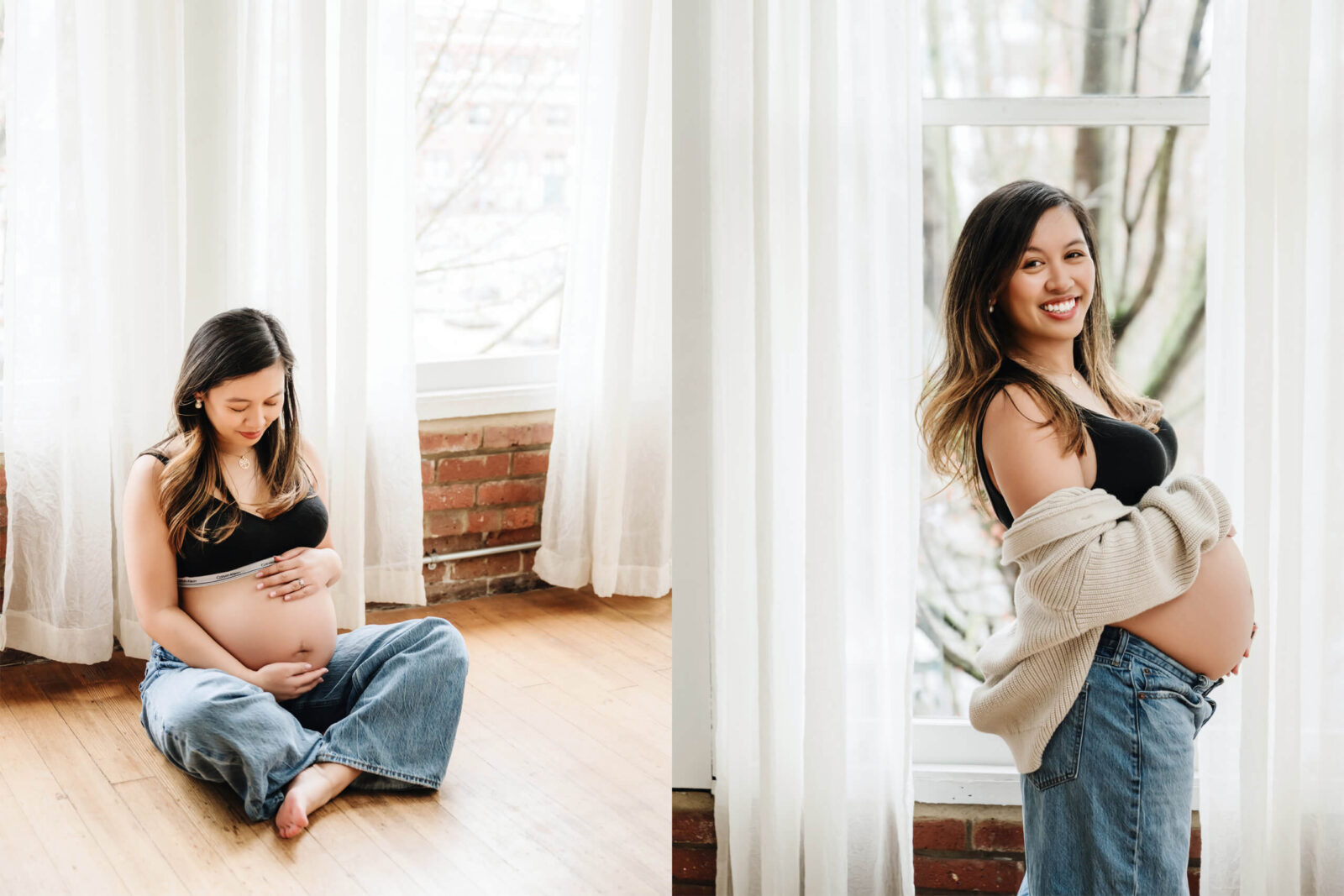
How I Guide Maternity Posing
You do not need to come to your maternity session knowing how to pose. I’ll guide you throughout, but I am not moving every person or couple through the same preset list of poses.
If you usually feel awkward in front of a camera or do not consider yourself photogenic, you are not expected to figure it out on your own. Guiding you is part of my job.
I’ve been photographing Seattle-area families since 2008, and more than 18 years of experience shape the way I give that direction. A pose that looks beautiful for one person may need to be adjusted for someone else.
Experience helps me recognize when something is working, when a small change will make the photograph stronger, and when it is better to let go of an idea and try something different.
I usually begin with an idea for the photograph — where I want you to stand or sit, how I want to position your partner, or the kind of interaction I want to create. Then I watch how that direction actually works for you.
If something does not look right to me, I adjust it. I may change an angle, bring you closer together, reposition your partner, alter the composition, or move on to another idea entirely.
I’m not trying to make you reproduce a pose that worked for someone else. I’ll give you direction, pay attention to what is actually happening in front of my camera, and adjust from there.
Couples are different, too. Some naturally have a quieter energy together, and their photographs may feel more composed. Others are more playful or expressive, which can lead to more movement and interaction. I do not consider one better than the other. I work with the connection that is already there.
And while many of the photographs I create are intentionally directed, I am also watching what happens between those directions. Sometimes a glance, a laugh, the way your partner reaches for you, or another small in-between moment becomes just as meaningful as the portrait I originally set up.
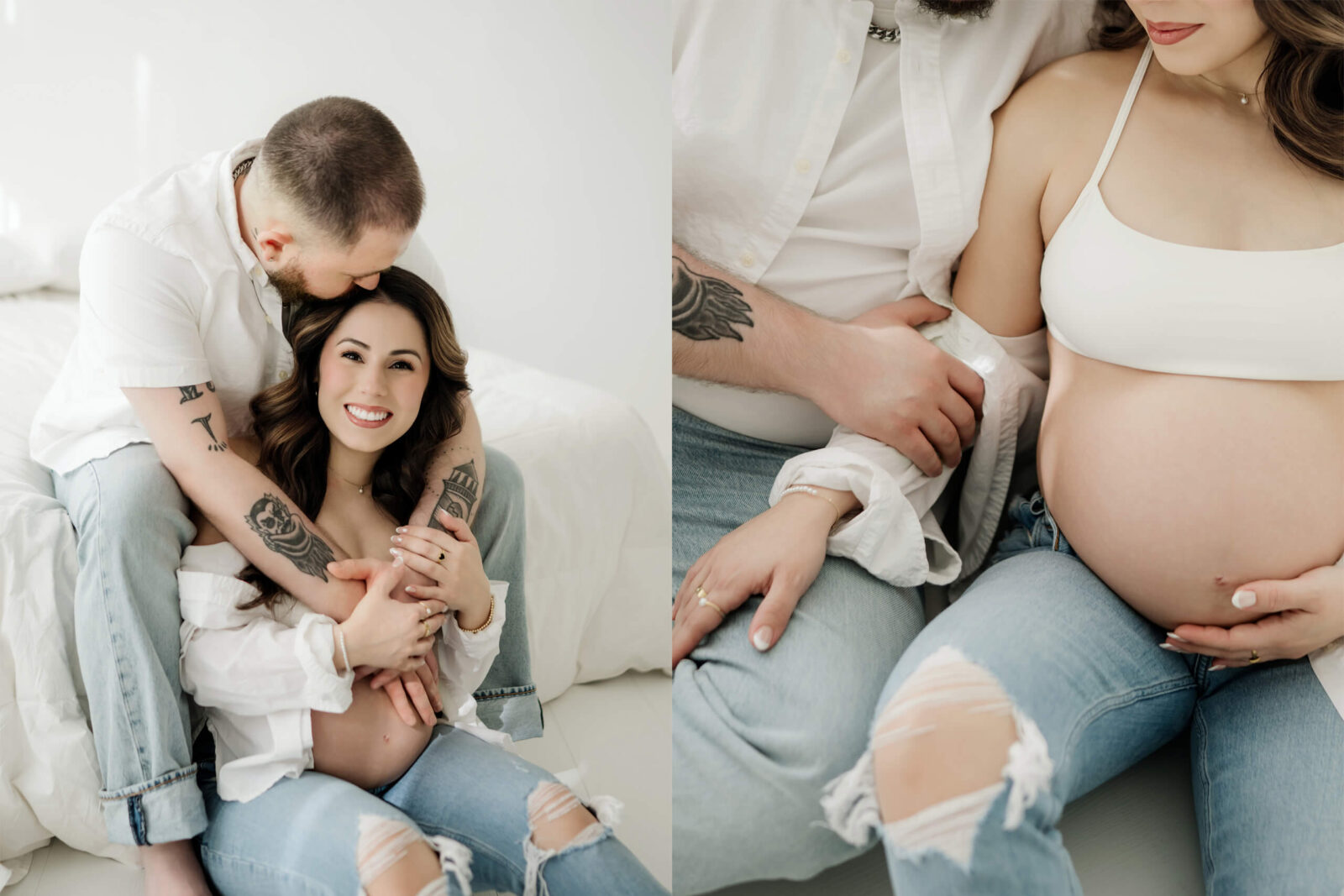
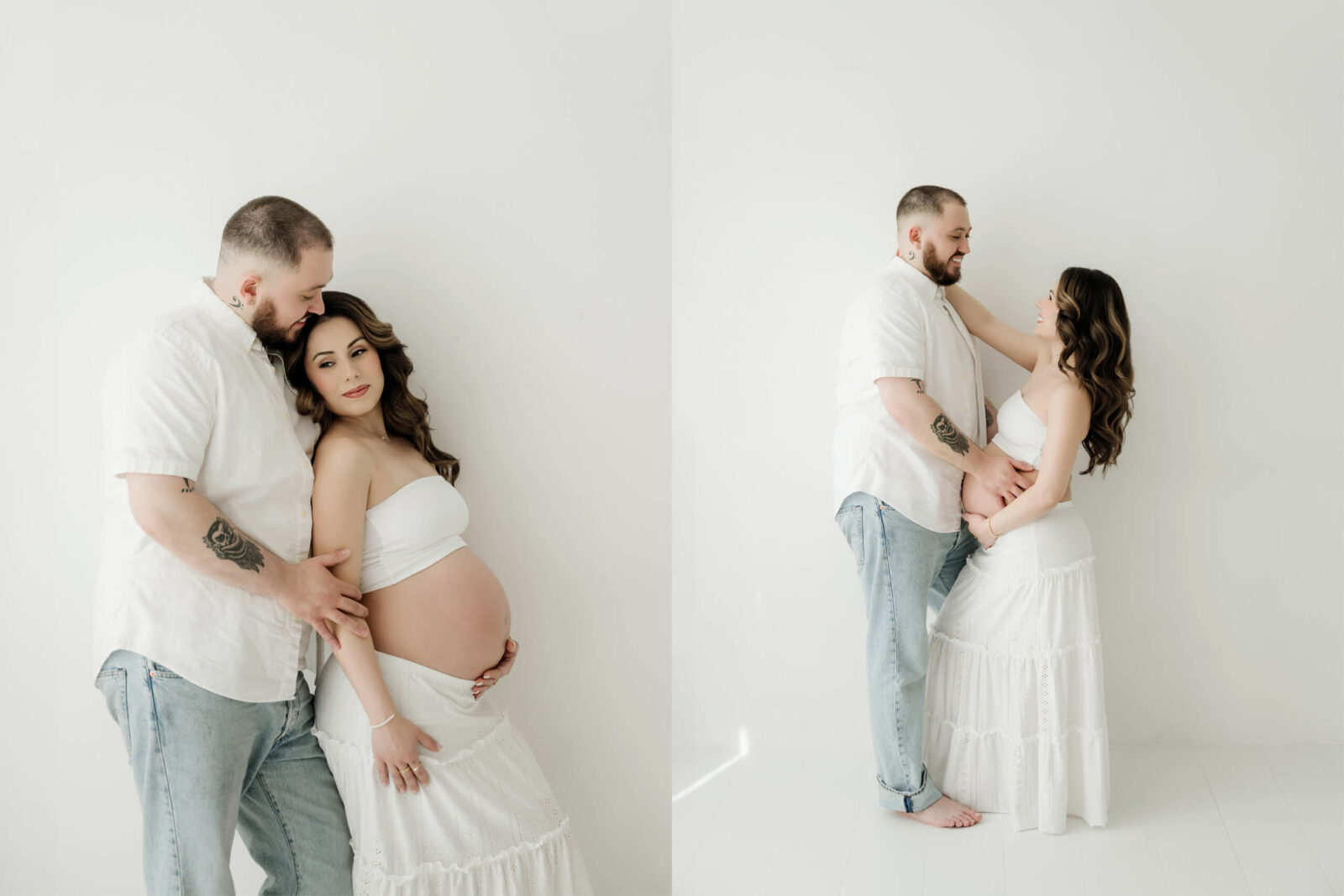
How I Create Variety in a Studio Maternity Gallery
Creating variety in a studio gallery is about much more than changing the background.
In either studio, I use posing, furniture, light, camera position, framing, clothing, and the people included in each photograph to create range while keeping the gallery cohesive.
Sometimes the difference is obvious. We might move from a standing full-body portrait to something seated, bring your partner or children into the frame, or use another part of the studio.
Other changes are quieter. I may move closer for a belly detail, photograph from another angle, shift the way I use the light, or create a tighter composition from a pose we have already been working with.
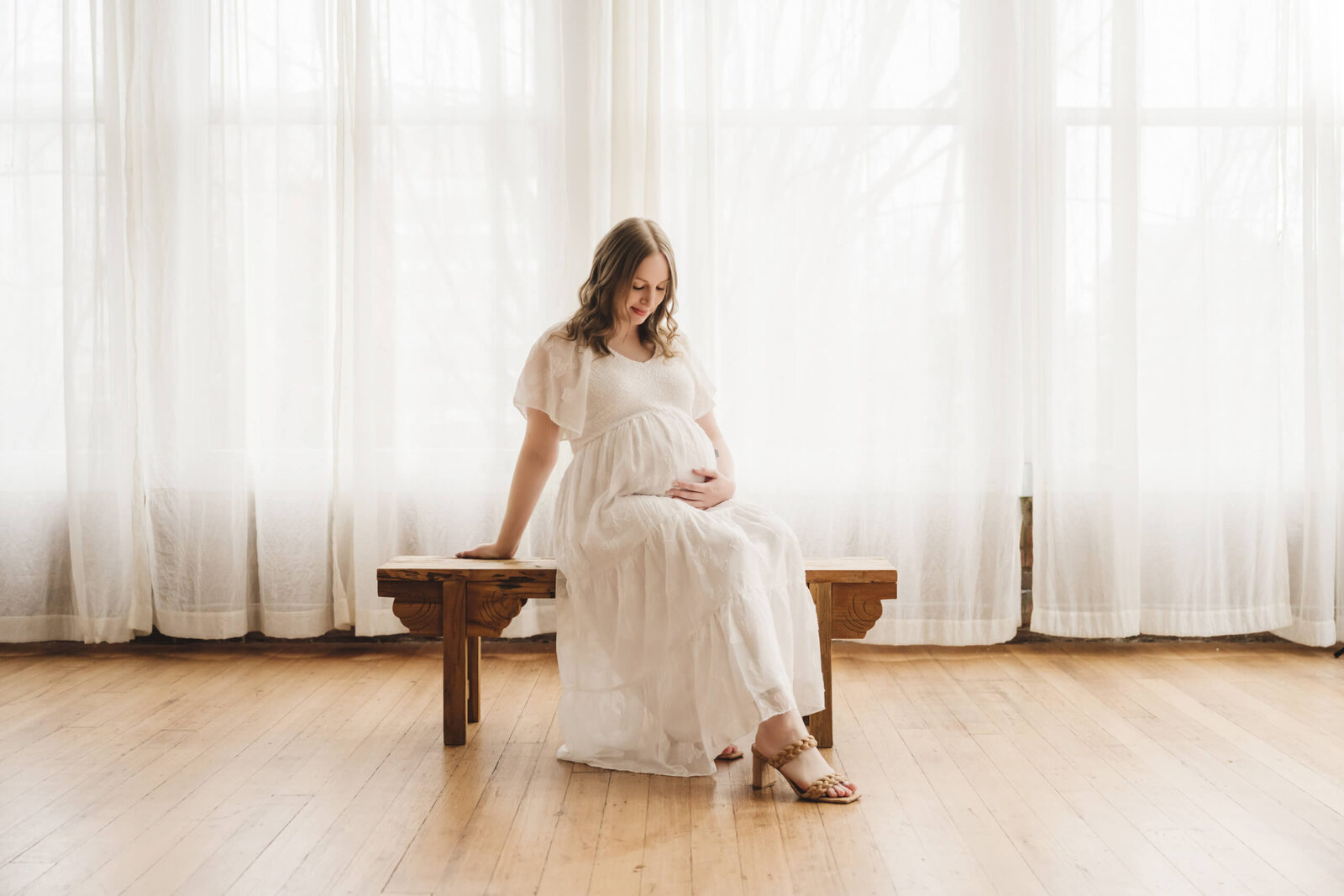
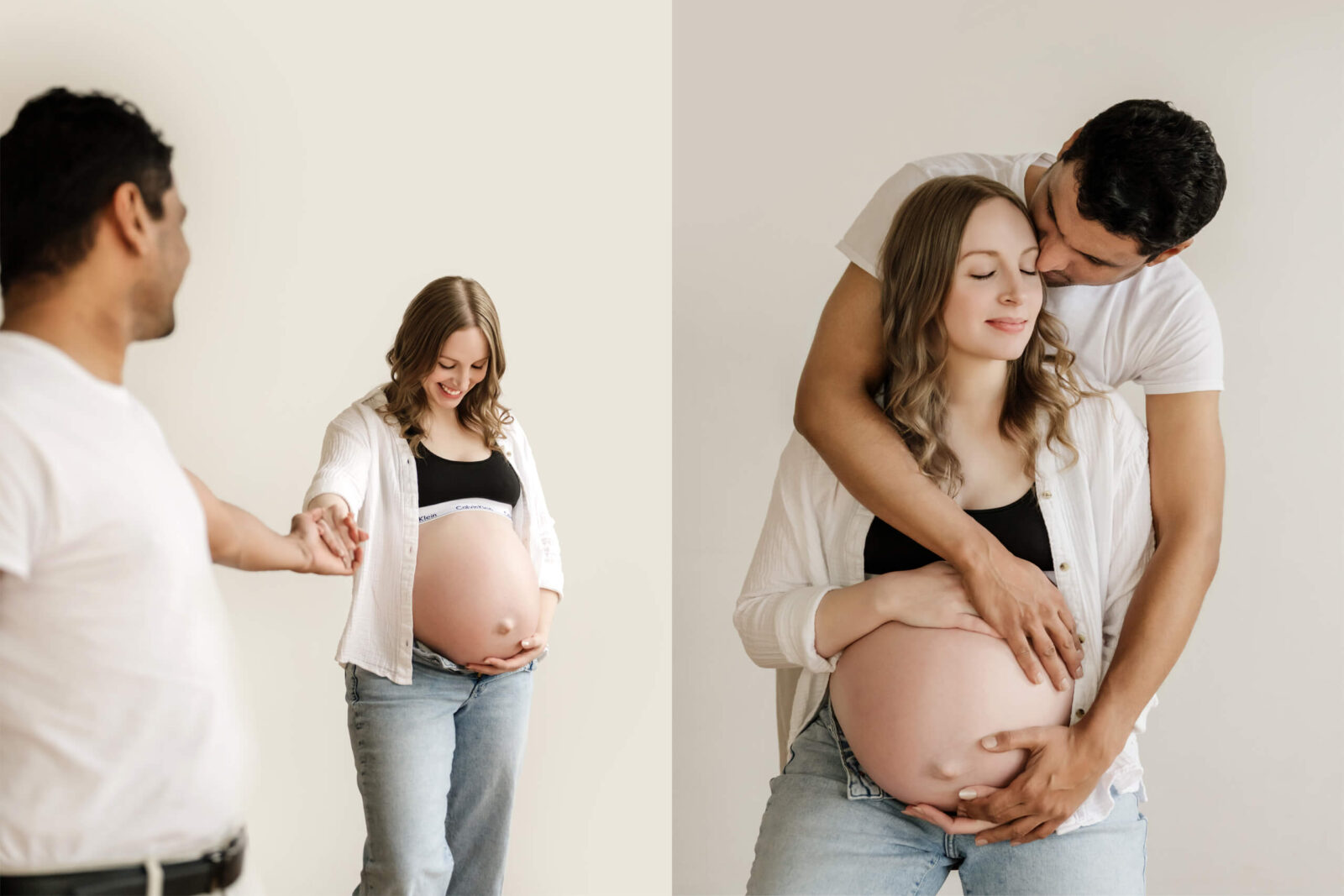
I am also paying attention to what happens between the more directed photographs. A change in expression, the way a couple naturally settles together, or a moment with a child can give me something entirely different from the portrait I originally set up.
Wardrobe contributes to that variety as well. A change in texture, silhouette, layering, or contrast can alter the feel of an image even when we stay in the same part of the studio.
I do not want every photograph to feel unrelated simply for the sake of variety. The goal is a gallery with range — different perspectives, interactions, and compositions — that still feels like one complete body of work.
What to Wear for Studio Maternity Photos
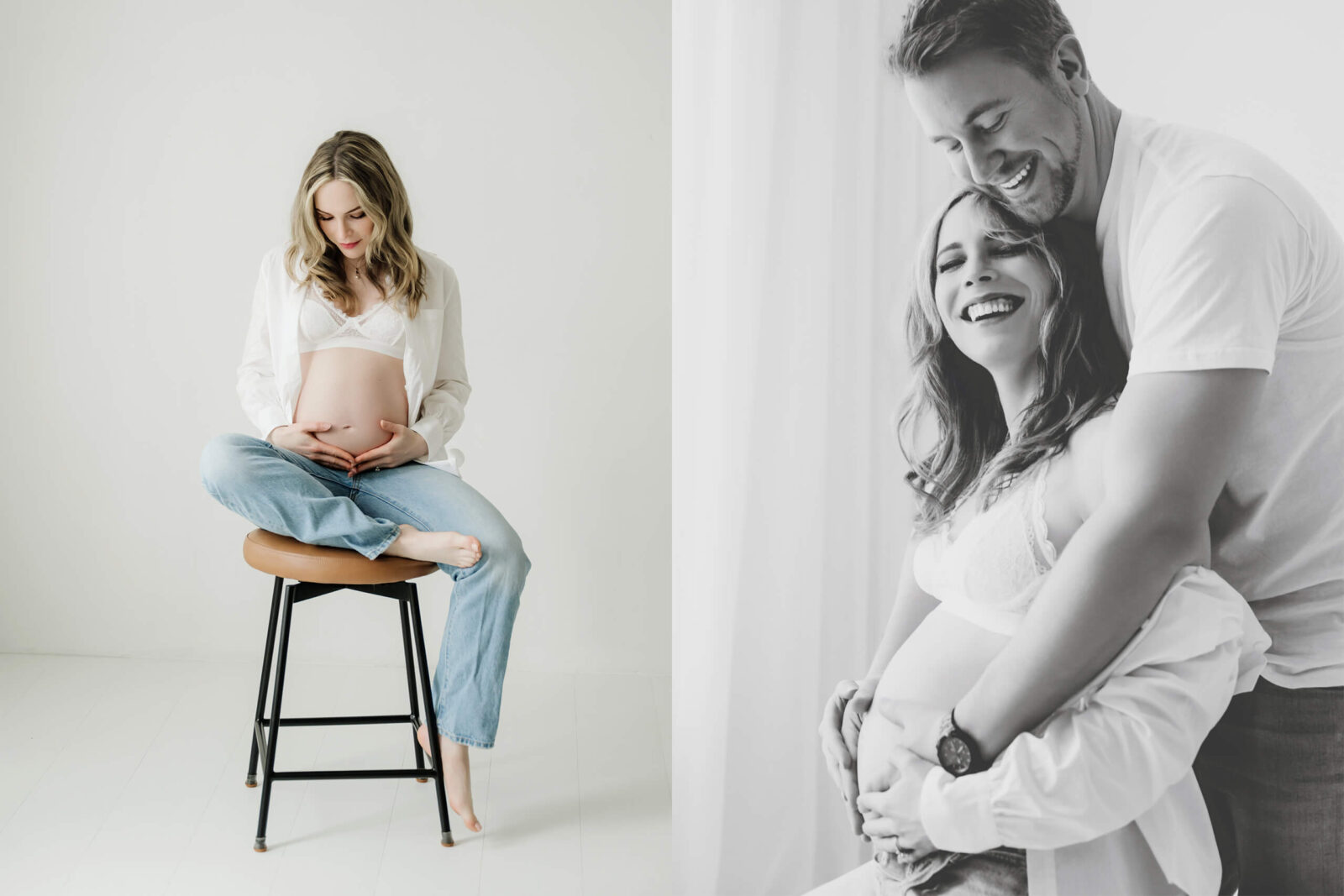
What you wear has a noticeable effect on the overall look of your maternity photographs. In a studio, clothing becomes part of the color palette, texture, and shape of the image rather than something separate from it.
The goal is not to recreate someone else’s outfit exactly or make everyone match. I want the clothing to work with the studio while still feeling like you.
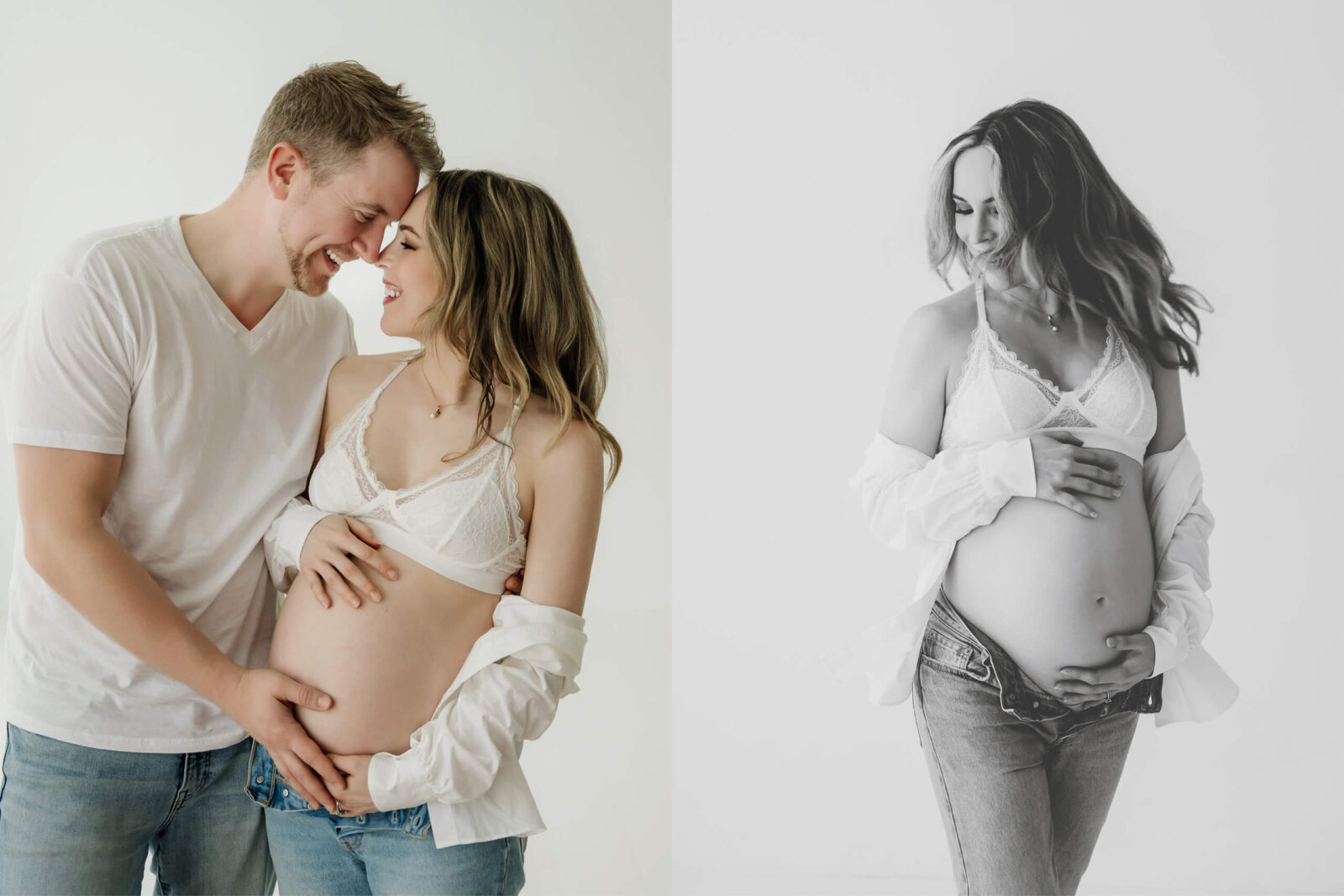
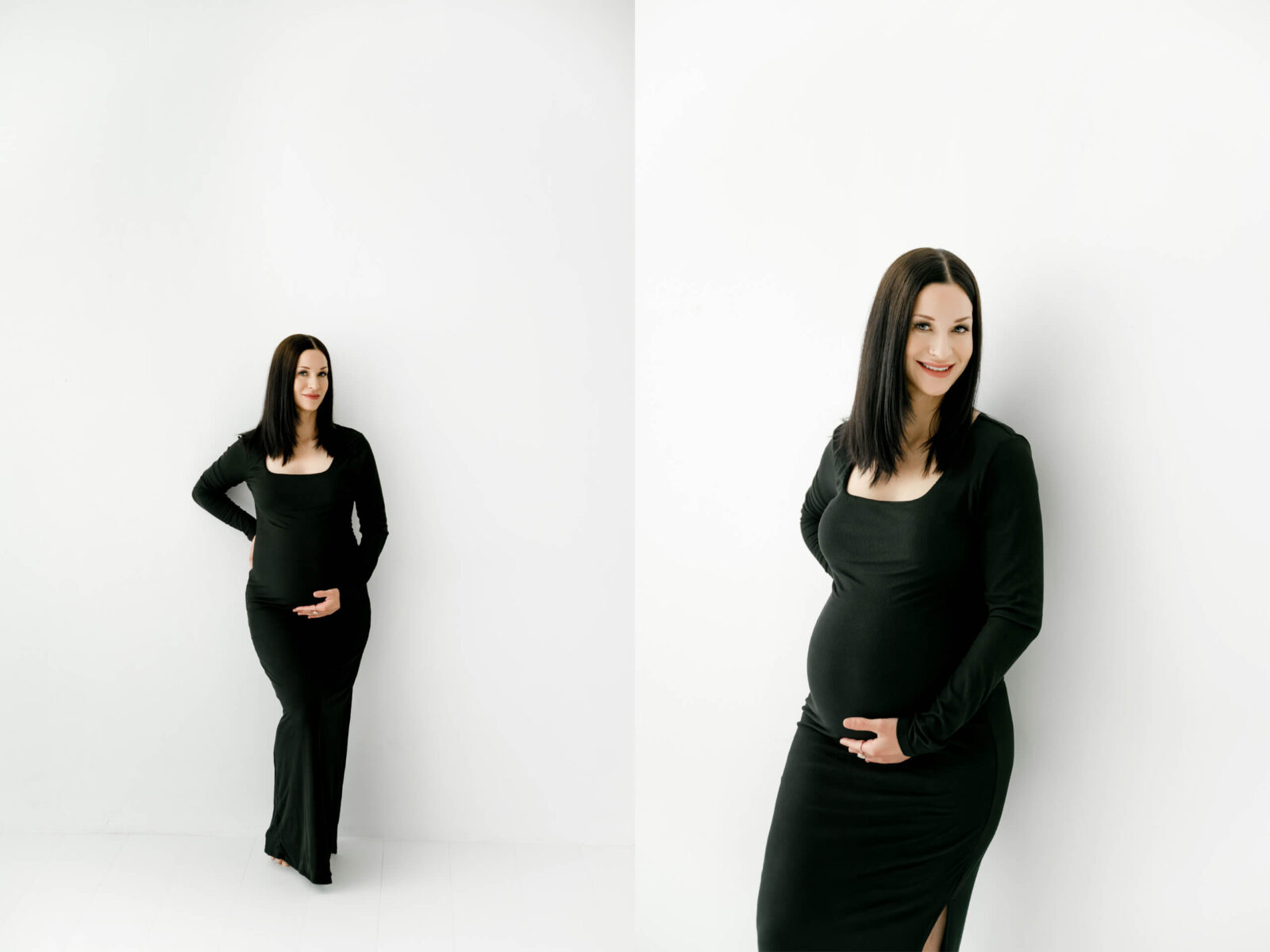
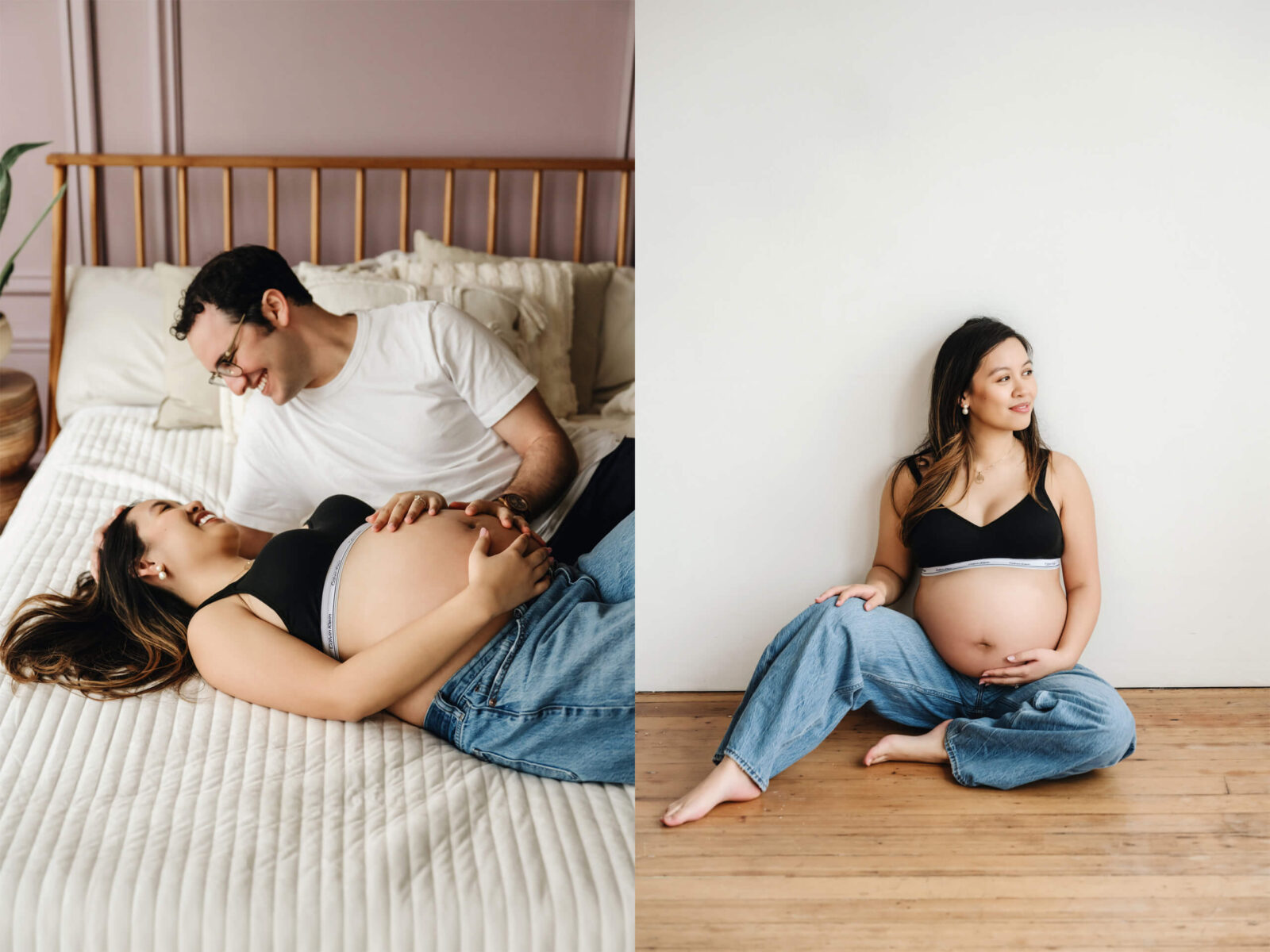
Some of my favorite studio maternity looks are also some of the simplest: denim with a bralette or fitted top, linen, soft knits, and casual dresses. An exposed belly can work beautifully, but it is completely optional. A similar overall look can usually be created with more coverage if that feels more like you.
What Works Well in the Simply White Studio
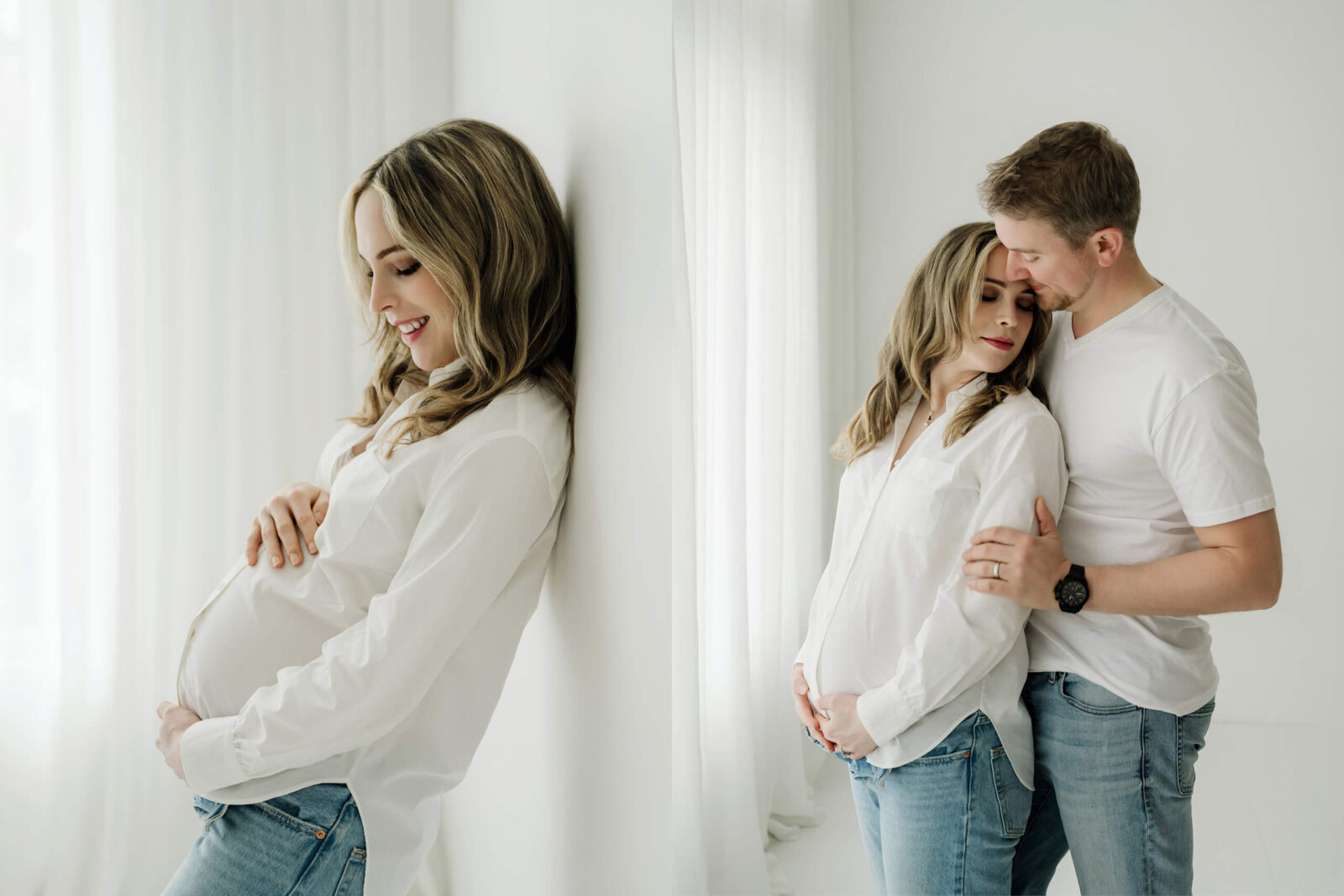
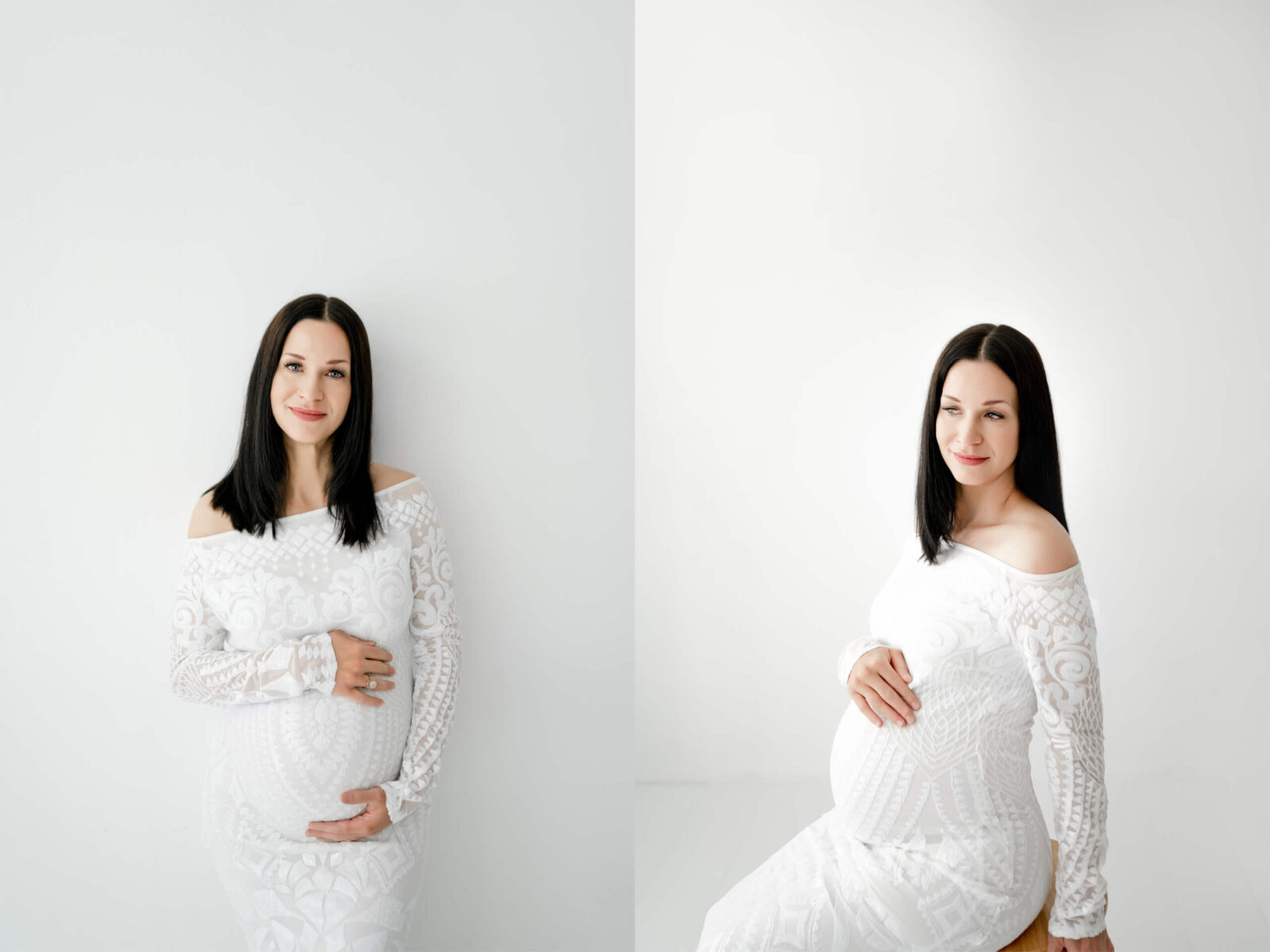
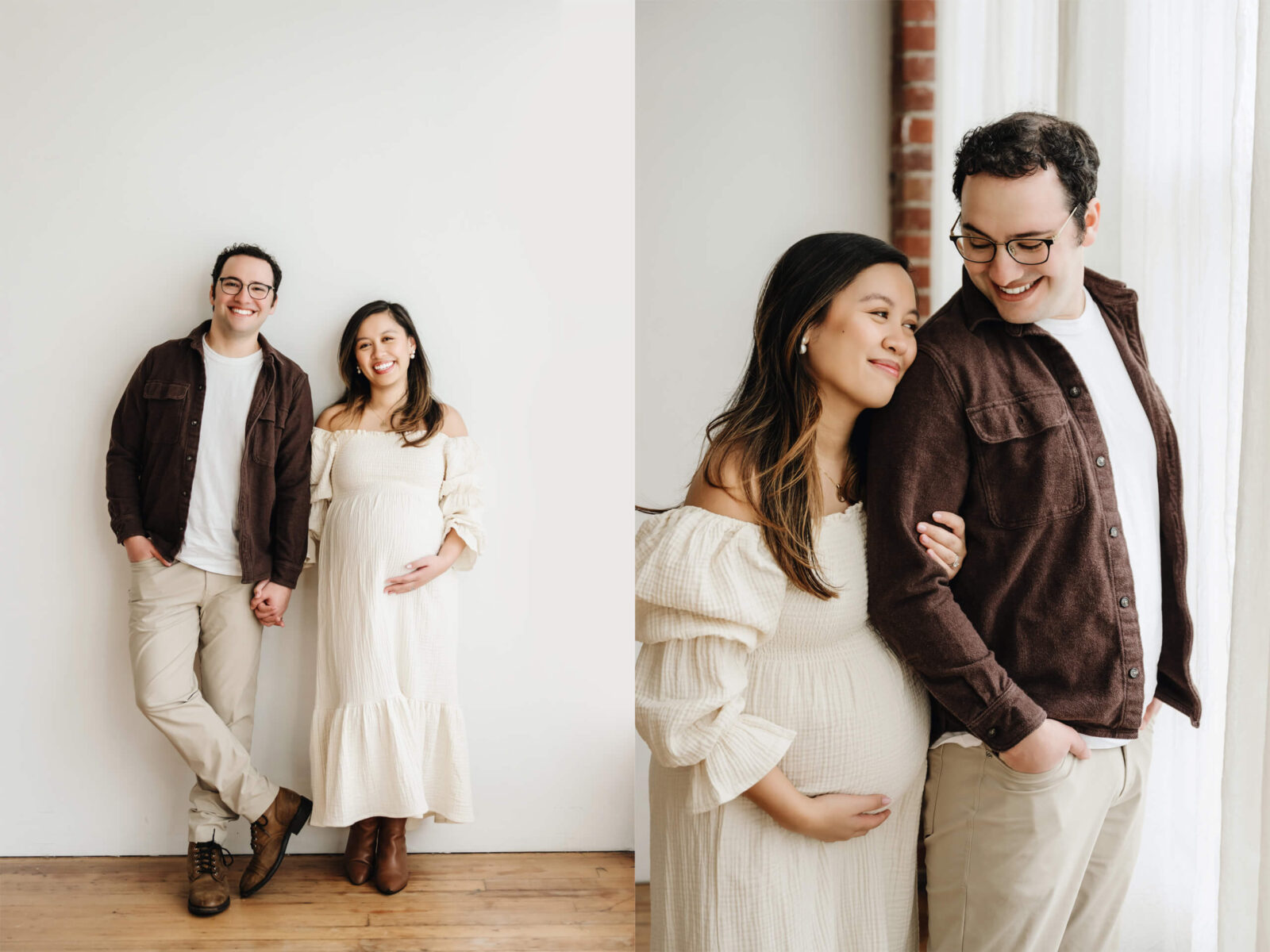
Because Simply White has a clean white environment, I generally recommend a neutral palette. White, cream, ivory, beige, nude, khaki, oatmeal, brown, black, and muted gold all work especially well here.
Neutral does not mean everything has to look the same. Denim makes the photographs feel more casual. Linen and knits introduce texture. A simple fitted dress keeps the silhouette clear. If you would like more of your belly visible, jeans with a bralette or similar top can create a simple, modern look.
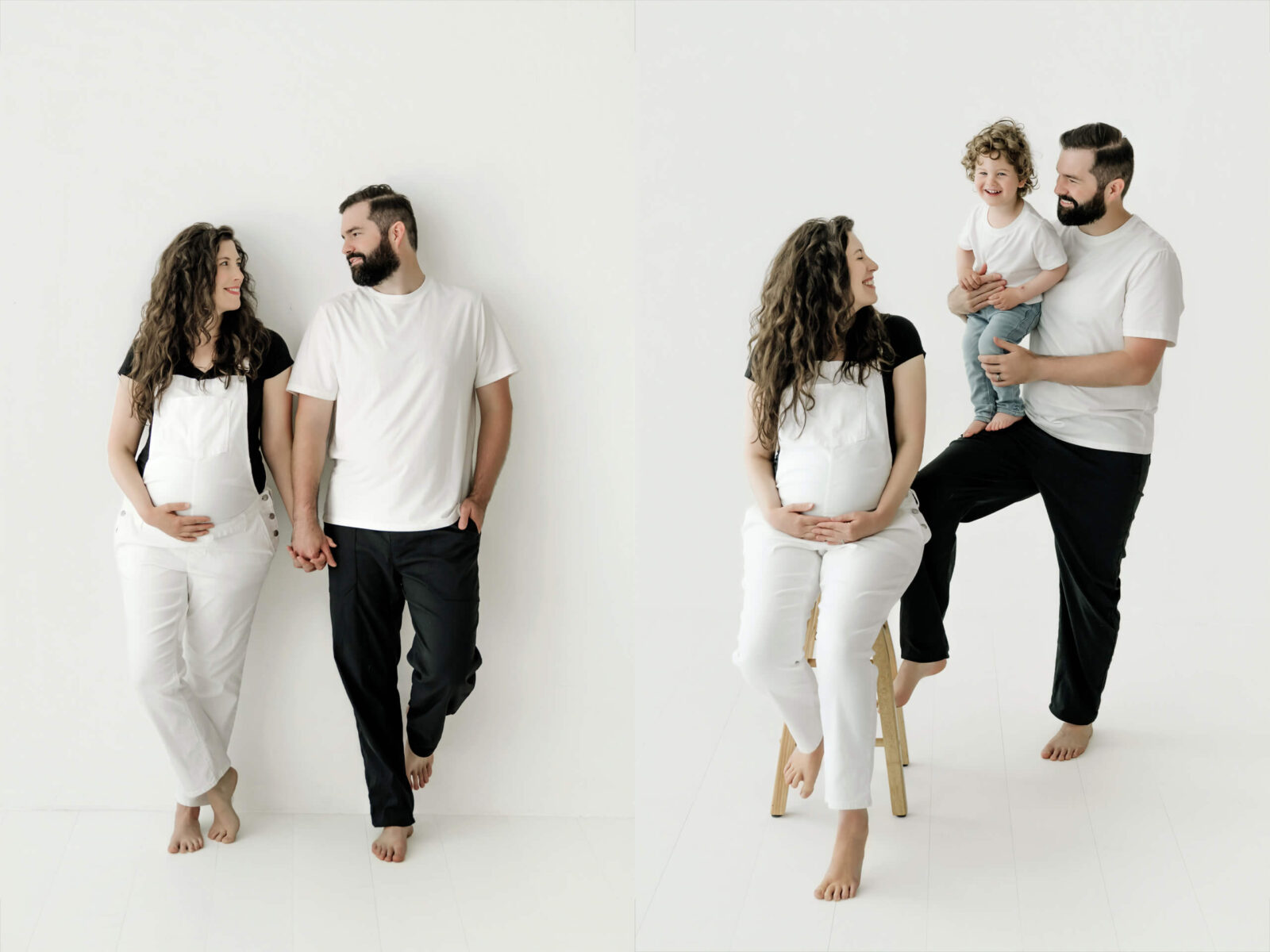
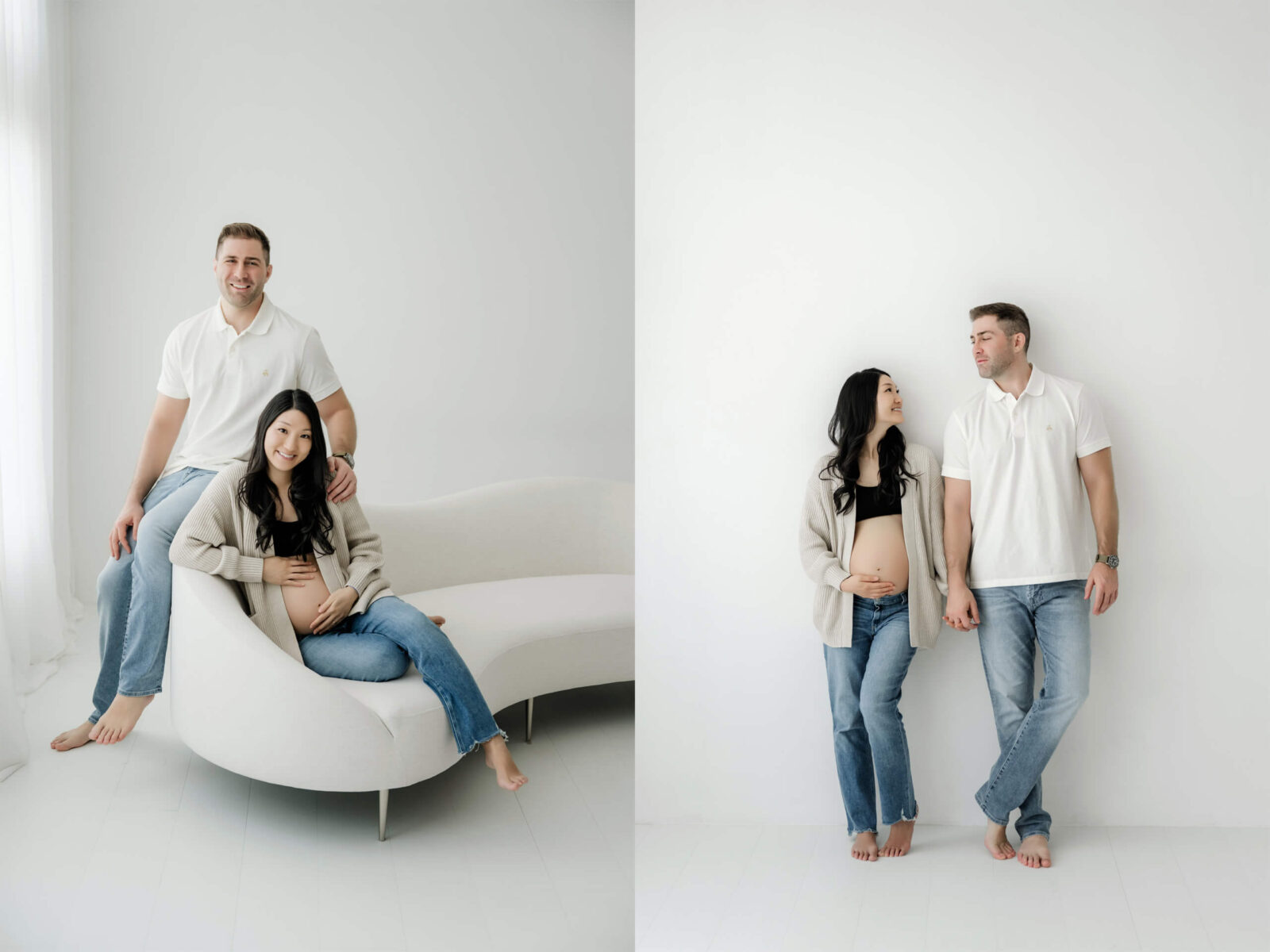
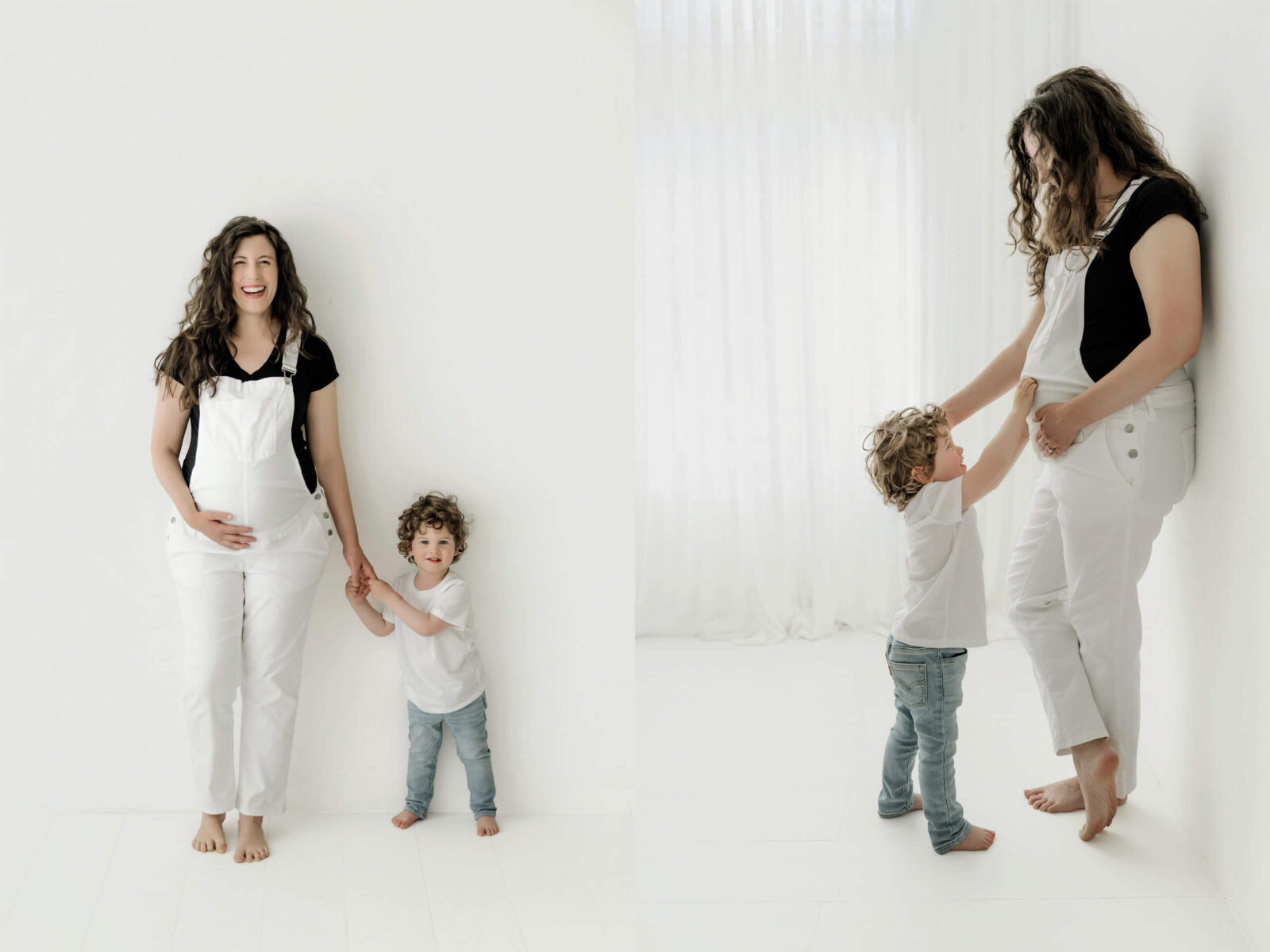
If your partner or children will be photographed with you, I usually recommend starting with mom’s outfit and coordinating everyone else around it. That is often much easier than trying to choose every person’s clothing at the same time.
What Works Well in the Rustic Lifestyle Studio
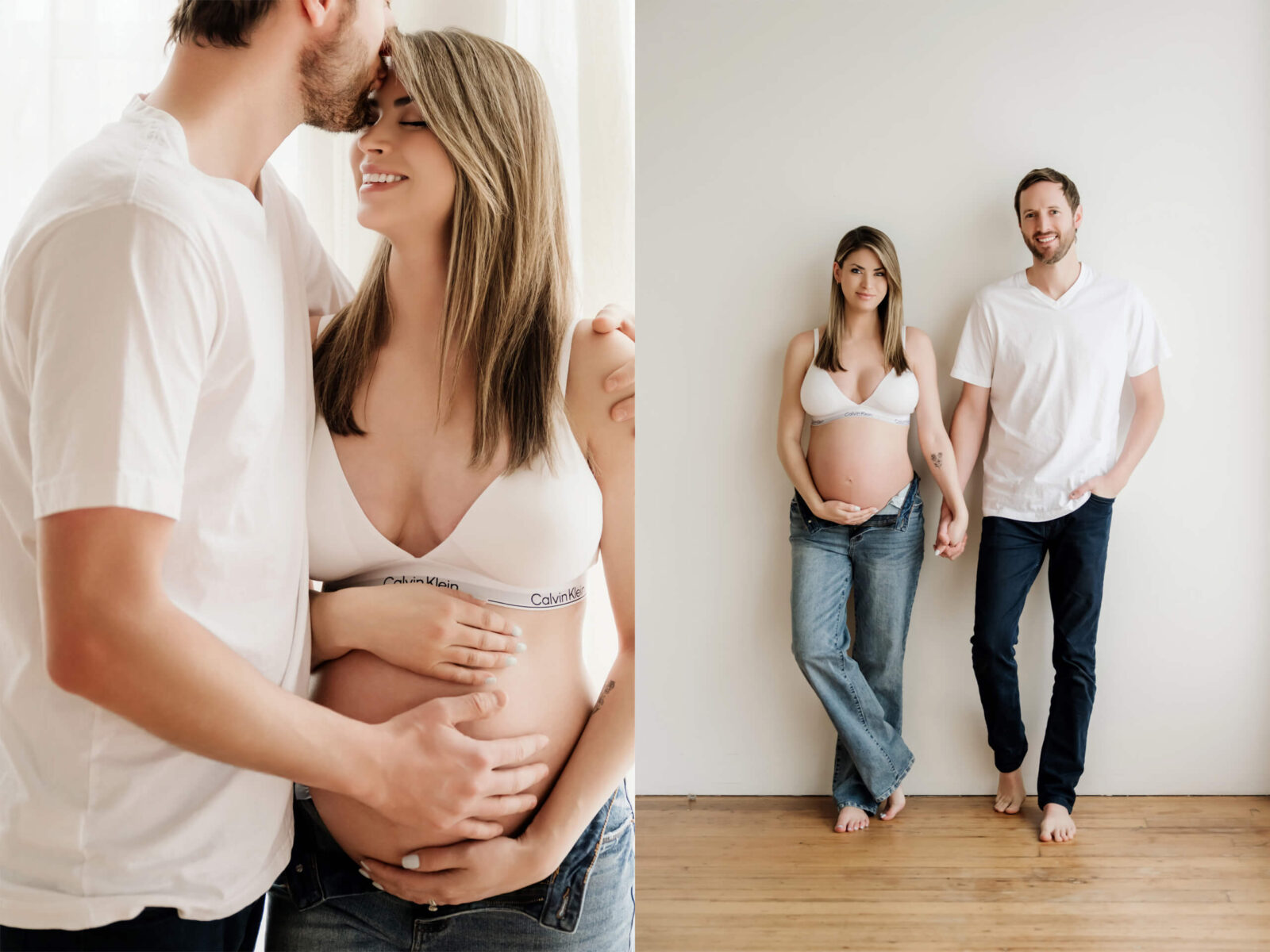
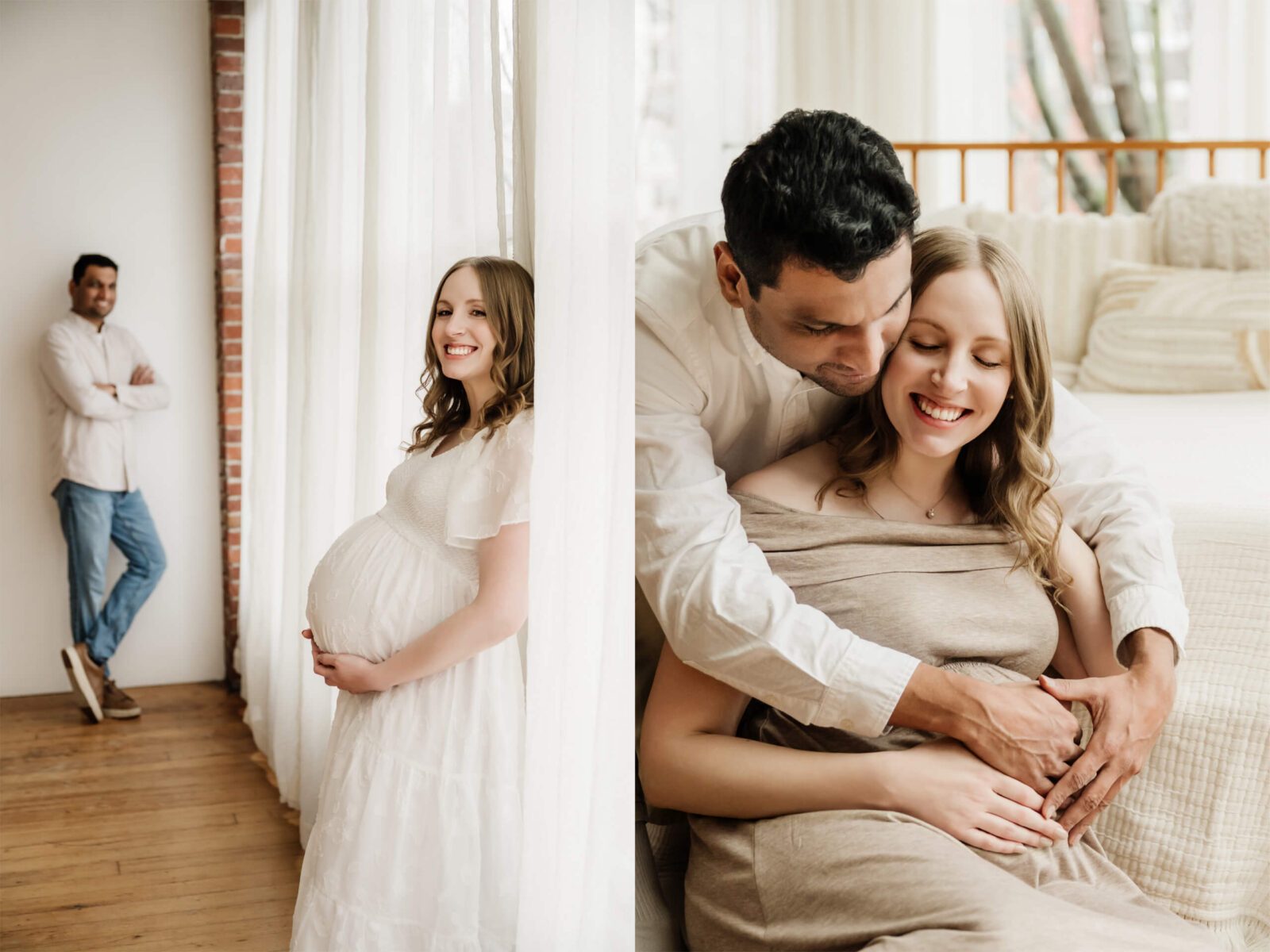
Rustic Lifestyle has more environmental texture and the feeling of a lived-in interior, so I especially like simple, relaxed clothing in this space. Whites, browns, nudes, and other neutral tones work naturally with its warmer surroundings.
Casual dresses, linen, knits, denim, and simple tops all fit the setting well. For dads, something as straightforward as khakis with a white, gray, or black top can work beautifully. Children can be kept equally simple with uncomplicated tees, leggings, shorts, or other neutral pieces.
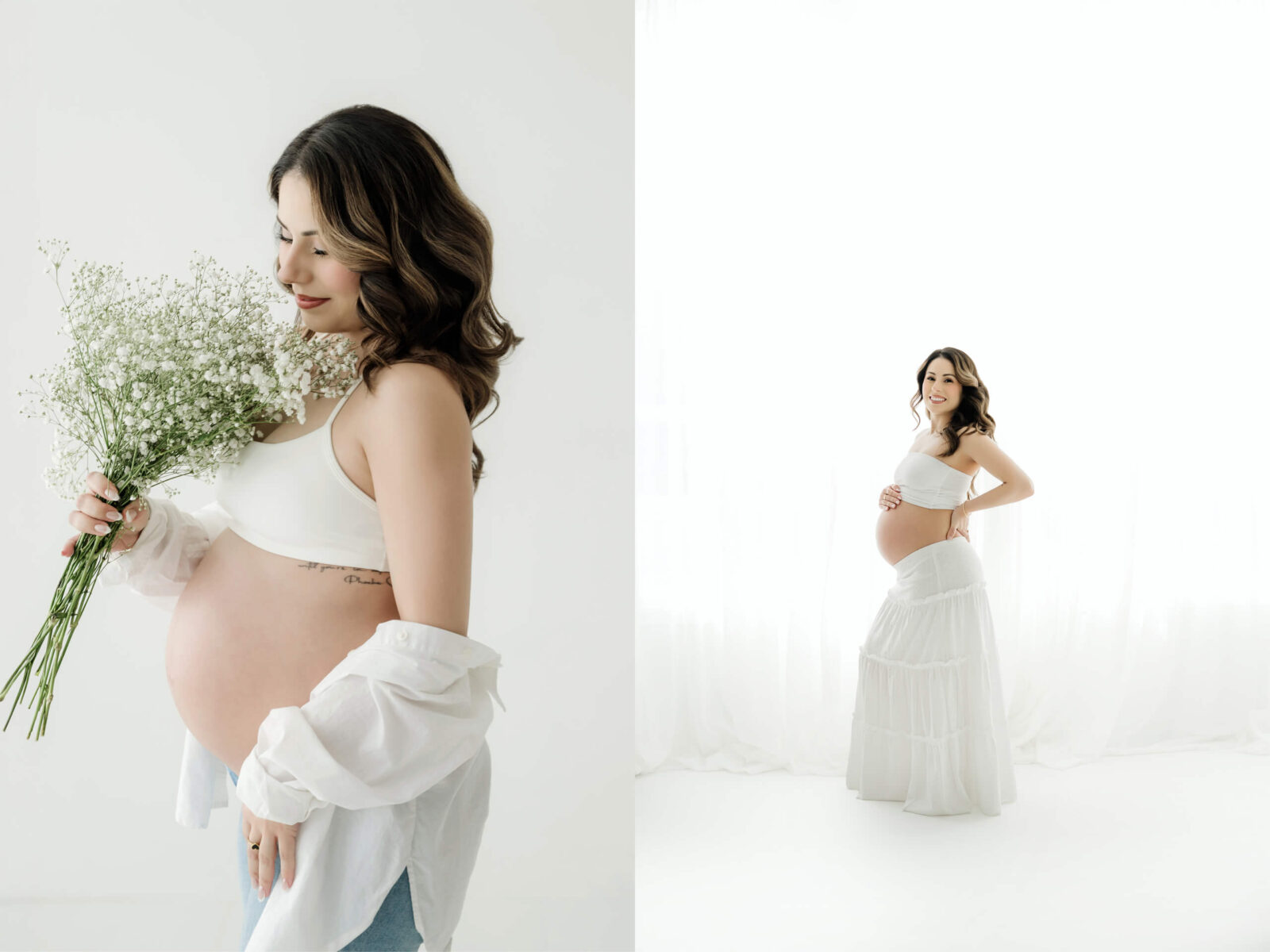
Rustic Lifestyle is also a natural fit for exposed-belly photographs. Jeans with a simple bralette or sports bra can create a clean, modern look without making the wardrobe feel elaborate.
A Few Practical Things to Keep in Mind
Whichever studio you choose, wear something you can comfortably move in. During the session you may be standing, sitting, shifting position, or moving between poses. If an outfit looks beautiful but makes those movements difficult, it can limit what we are able to do with it.
I also generally avoid very bright red for these studio sessions because it can become the strongest visual element in the photograph.
Traditional maternity gowns are not a good fit for the look I create in either of these studio settings. Both Simply White and Rustic Lifestyle are designed around a simpler, more relaxed approach to maternity styling — denim, linen, knits, simple dresses, and exposed-belly looks all sit naturally within these spaces.
A dramatic maternity gown creates a very different visual style and can feel disconnected from the photographs you see here. If that kind of gown is an important part of the maternity look you have in mind, these particular studio styles may not be the best fit.
After you book, I’ll send you a detailed preparation guide and give you access to my online styling service, with additional help planning clothing for the studio you chose.
Simply White or Rustic Lifestyle? Choose by the Photographs You Want
Both studio options allow us to create solo maternity portraits, photographs with your partner or children, more composed portraits, and images with more natural interaction.
The biggest difference is not how I pose you. It is the visual environment around you.
When choosing between the two, I recommend looking closely at the photographs rather than starting with a list of features. Which space looks more like the maternity gallery you want to have?
Simply White — Kirkland
Simply White is the lighter, simpler, more minimal of the two studio environments.
The white wall, soft curtains, bed, couch, bench, and chairs give me several ways to work within the studio while keeping the overall look intentionally restrained. With less visual detail competing for attention, the emphasis stays closely on you, your shape, your clothing, and your family.
Rustic Lifestyle — Seattle
Rustic Lifestyle takes place in a natural-light studio in downtown Seattle. It has more environmental texture, more distinct backgrounds, and a warmer, more lived-in feeling.
The room itself plays a larger role in the photographs. Instead of the restrained white surroundings of Simply White, there is more visible character and context around you, creating a more environmental, lifestyle-oriented look.
What does not change is the way I work with you. I am still giving direction, adjusting what I see, creating intentional portraits, and paying attention to the natural moments that happen between them.
How to Choose
If you are drawn to a lighter, more minimal environment with very little competing for attention, Simply White will probably feel closer to what you are looking for.
If you prefer more texture, visible surroundings, and a warmer interior feel, you may be more drawn to Rustic Lifestyle.
Neither studio is the “posed” option or the “candid” option. I create intentional portraits and more natural interaction in both. The better choice is simply the environment that looks more like the maternity photographs you want to have.
View Current Maternity Session Options →
Simply White Mini or Deluxe: What Changes during the session?
For Simply White, you can choose between a Mini and Deluxe session. The difference is not only the amount of time in the studio. More time gives us more room for outfit changes, pose variations, different family combinations, and flexibility in how the session unfolds.
Rustic Lifestyle is currently offered as a Deluxe session rather than a Mini, so this comparison applies specifically to Simply White.
The Simply White Mini
The Mini is a shorter, more focused session. We work with one outfit and no full outfit change, so I use the time to create as much meaningful variation as I can within that look.
There can still be some wardrobe variation. If you are wearing jeans with a top over a bralette or similar piece, for example, we can photograph the covered look first and then remove the top for exposed-belly photographs. That creates a noticeably different result without taking time for a complete outfit change.
I can also change the posing, framing, camera position, furniture, and who is included in the photograph. What changes most in a Mini is how many variations of each idea we have time to explore.
If you want a smaller, focused set of studio maternity photographs, that may be exactly enough. It can also be a good fit if you simply prefer spending less time in front of the camera.
The Simply White Deluxe
The Deluxe gives us more room to let the session develop.
When you arrive, I look at the outfits you have planned and decide where it makes the most sense to begin. I often start by photographing mom alone and then bring in her partner, but that sequence is not fixed.
If children are part of the session, it may make more sense to begin with the family while they are ready to participate. If a child needs time to warm up, I can start somewhere else and come back.
I take the same flexible approach to outfits. I do not divide the session into rigid blocks and spend an exact amount of time on each one. If I feel we have enough strong variation from one look, we may move on. If a particular outfit or type of photograph matters more to you, we can give it more attention.
That additional time also lets me stay with an idea when it is working — exploring another angle, composition, or interaction instead of needing to move on as quickly.
What If You Are Bringing Children?
Children do not automatically mean you need the Deluxe.
For some children, a shorter session works especially well because their window of interest is limited. If your main priority is a few photographs together as a family, the Mini may be a very good fit.
Other children need time to warm up, may want a break, or do better when I have room to move between family photographs and portraits of mom alone. In those situations, the Deluxe gives us more flexibility.
It is also the stronger fit when you want more family combinations and more overall variation.
Every child is different, so I think about this choice in terms of the photographs you want and how much flexibility is likely to be useful — not as a rule that one session length is automatically better for families.
Open-Belly Maternity Photographs Are Optional
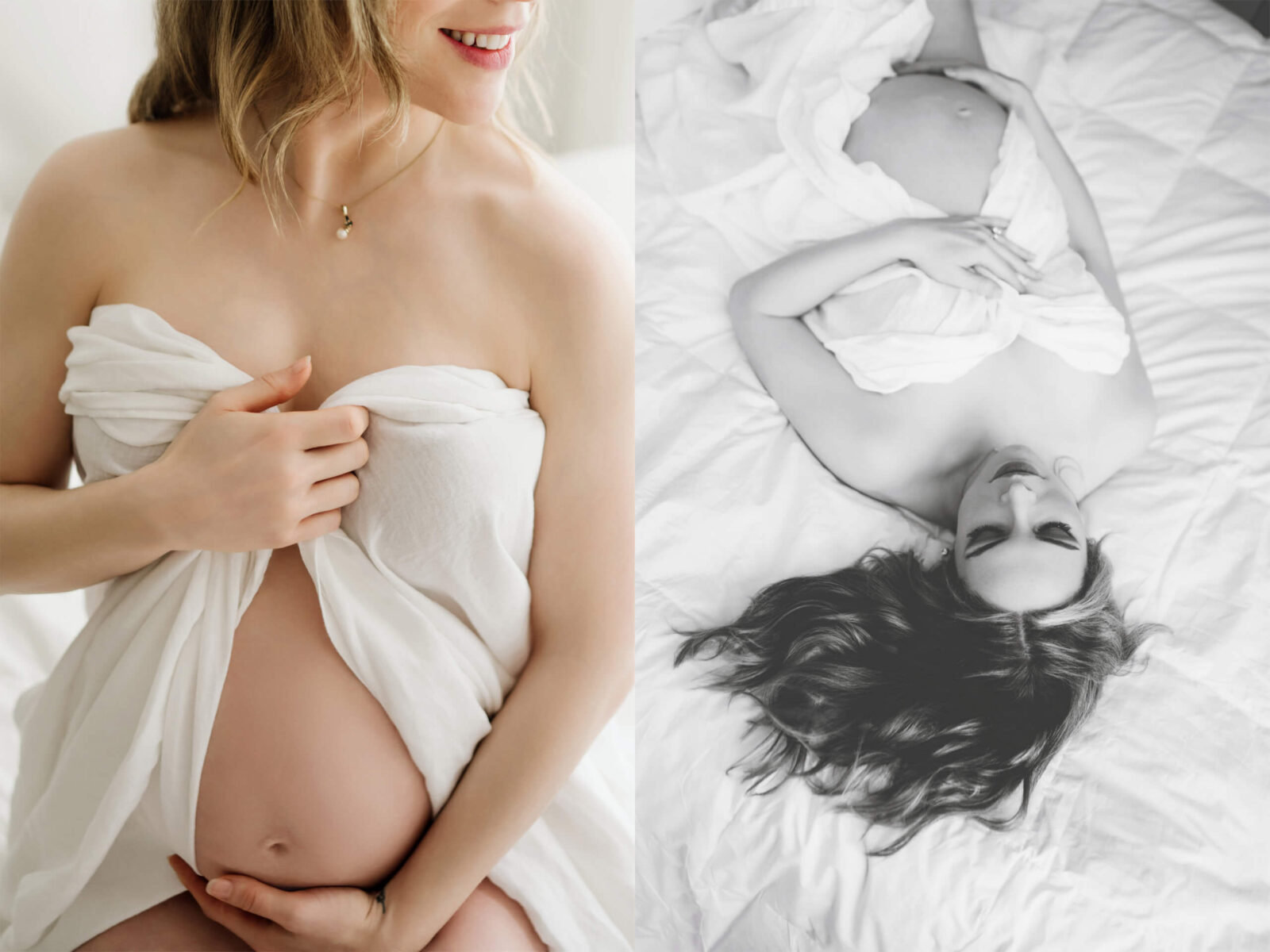
You do not have to show your belly or a lot of skin during your maternity session.
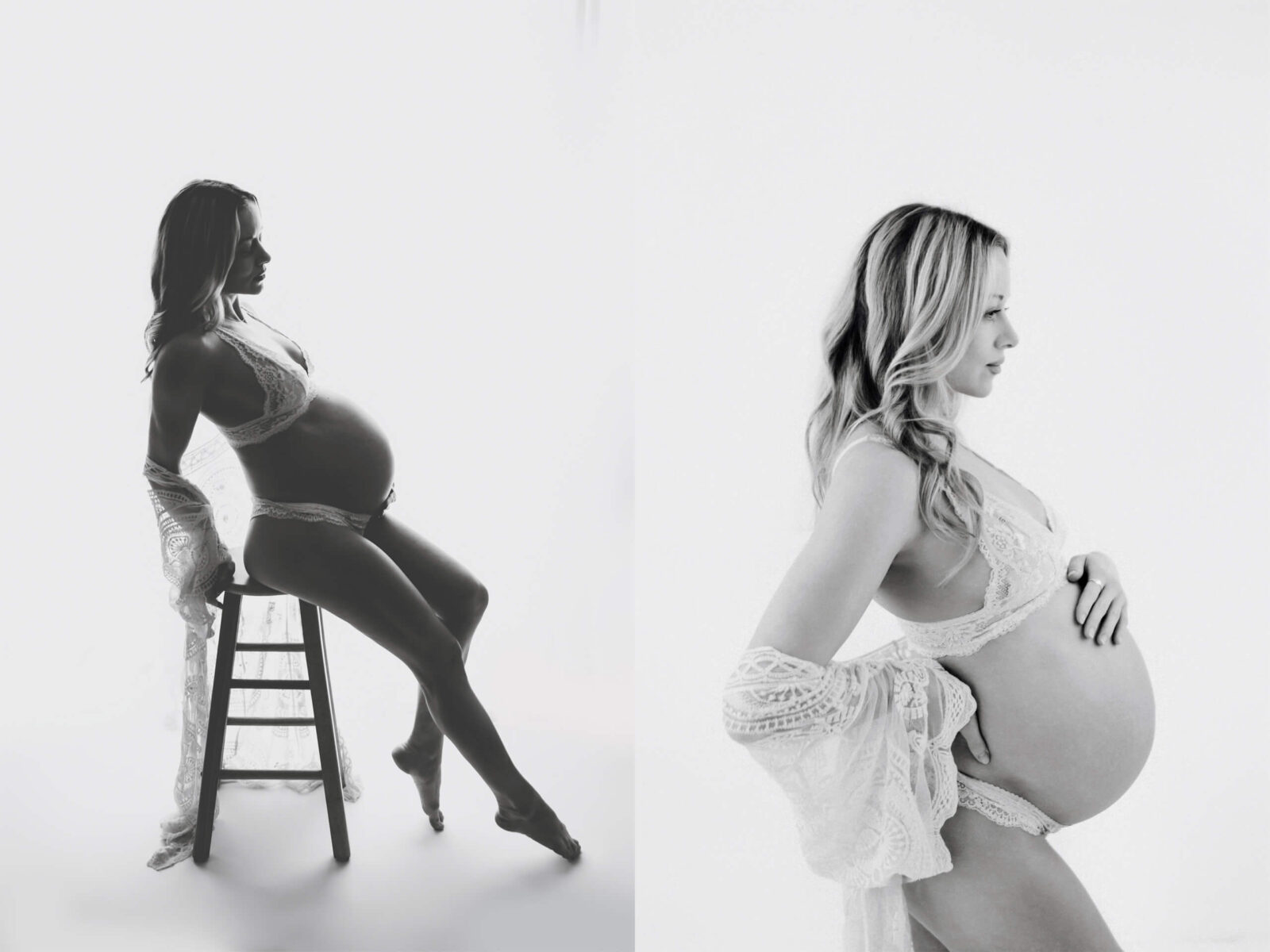
Open-belly photographs are completely optional, and you decide how much skin you want to show. Some clients choose a bralette, cropped top, or similar look that reveals more of the belly; others prefer to stay fully covered.
If you would like to include an open-belly look, you can change in the studio. Your partner or family can still be part of the session, and the approach is essentially the same in both Simply White and Rustic Lifestyle.
These are still maternity photographs, not a separate boudoir session. It is simply another styling direction we can use if the look appeals to you.
When to Schedule Studio Maternity Photos
I typically recommend scheduling maternity photographs around 28–32 weeks. By then, your belly is usually well established while there is often still some flexibility in how you move and pose.
That is a guideline, not a hard cutoff. Every pregnancy is different, so the right timing can depend on how you are feeling, how your pregnancy is progressing, and what feels comfortable for you.
What’s Next
You should now have a clearer sense of what studio maternity photographs can include, how I guide posing, how wardrobe shapes the visual result, and how Simply White and Rustic Lifestyle differ.
If you are ready to compare the current session options, the next step is to choose the combination of studio style, pace, and variety that best matches the photographs you want to create.
View Current Maternity Session Options →
If you would like to see more of my maternity work before deciding, you can also browse the broader portfolio.
About Lana
Svetlana (Lana) Ozik has photographed more than 2,300 Seattle-area families since 2008, specializing in maternity, newborn, milestone, and family photography. Her approach combines thoughtful preparation, clear direction, and the flexibility to adjust to babies, children, changing light, and the natural unpredictability of photographing families. Learn more about Lana and Lana Sky Photography.

